Why monitoring matters now
Smart contracts are immutable by design, which means they are also unforgiving. Once deployed, a contract cannot be patched if a flaw is discovered. This permanence creates a high-stakes environment where the difference between a functional application and a total loss often comes down to seconds or minutes. Continuous tracking and analysis of these contracts are no longer optional luxuries; they are the primary defense against malicious exploits and operational failures Blockaid.
The financial reality of this risk is visible in the broader market. When security fails, it doesn't just drain a single protocol; it shakes confidence across the entire ecosystem. The value at risk is substantial, and the speed of modern exploits means that passive observation is insufficient. Teams must move from reactive audits to proactive, real-time monitoring to protect assets.
A robust smart contract monitoring strategy serves as the nervous system for any Web3 project. It provides the visibility needed to detect anomalies before they become catastrophic. Without it, you are flying blind in a market where the cost of error is measured in millions.
Core monitoring infrastructure
Real-time event tracking and transaction analysis form the backbone of any robust smart contract monitoring strategy. Without this infrastructure, you are essentially flying blind, relying on post-mortem forensics rather than proactive defense. The goal is to capture every state change as it happens, allowing you to react to anomalies before they escalate into critical failures.
Event signatures and data redundancy
Understanding event signatures is the first step in parsing blockchain data. Each event emitted by a smart contract carries a unique hash that identifies its type. By filtering for these specific signatures, you can isolate relevant activities from the noise of general chain traffic. However, relying on a single data source is risky. Data redundancy ensures that if one node or indexer fails, you still have a complete picture of contract activity.
Event signatures act as the unique fingerprints of contract actions, while data redundancy serves as your insurance policy against blind spots in monitoring coverage.
Real-time activity tracking
Modern tools have simplified the process of tracking smart contract activity. Services like Circle’s Event Monitoring allow developers to subscribe to activities on any smart contract or account in real-time. This immediacy is crucial for high-stakes environments where seconds matter. Whether it’s a large transfer or a sudden change in governance parameters, real-time alerts enable you to intervene before a vulnerability is exploited.
Transaction analysis layers
Beyond simple event listening, deeper transaction analysis provides context. You need to correlate on-chain events with off-chain data, such as oracle price feeds or external API responses. This layered approach helps distinguish between legitimate market movements and malicious manipulation. By integrating these layers, you create a comprehensive view that supports informed decision-making and rapid incident response.
Top tools for contract tracking
Choosing the right monitoring stack is less about finding a single "best" platform and more about matching the tool to your specific threat model. Some projects need real-time alerting for front-running protection, while others require deep historical analysis for forensic audits. The landscape has shifted from simple RPC polling to sophisticated event-based tracking engines that can handle high-frequency activity without breaking the bank.
Tenderly: The Developer’s Safety Net
Tenderly has become the standard for developers who need to bridge the gap between testing and production. Its monitoring capabilities are tightly integrated into its execution environment, allowing you to simulate transactions before they hit the mainnet. This is critical for high-stakes deployments where a single syntax error or logic flaw can result in total loss of funds. The platform offers real-time transaction monitoring and incident management, making it ideal for teams that prioritize speed and immediate feedback loops.
Circle’s Event Monitoring: Institutional-Grade Tracking
For projects requiring robust, scalable infrastructure, Circle’s Event Monitoring provides a streamlined way to track activities on any smart contract or account. Unlike traditional methods that rely on heavy RPC nodes, this service is designed to handle real-time data ingestion with minimal latency. It is particularly useful for applications that need to react instantly to on-chain events, such as automated yield strategies or high-frequency trading bots. The focus here is on reliability and ease of integration for enterprise-level applications.
Smart Contract Watch: The Open-Source Alternative
Not every team has the budget for premium SaaS platforms. Smart Contract Watch, available on GitHub, offers a lightweight, open-source solution for monitoring contract interactions. It works by generating transactions and events based on predefined triggers, allowing you to set up custom alerts without vendor lock-in. This approach is favored by decentralized autonomous organizations (DAOs) and independent developers who prefer to maintain full control over their security infrastructure and data privacy.
Comparison of Monitoring Platforms
The table below breaks down the core differences between these three approaches. Your choice should depend on your team’s technical resources and the specific risks you are trying to mitigate.
| Tool | Type | Best For | Cost |
|---|---|---|---|
| Tenderly | SaaS Platform | Real-time simulation & incident management | Freemium / Paid |
| Circle Event Monitoring | API Service | High-volume, low-latency tracking | Usage-based |
| Smart Contract Watch | Open Source | Custom, low-budget setups | Free |
The Market for Smart Contract Security
The landscape for smart contract monitoring is shifting from reactive patching to proactive, AI-driven defense. As DeFi protocols continue to attract institutional capital, the cost of failure has moved beyond simple financial loss to existential threats for platforms. Monitoring is no longer just a developer tool; it is a core component of institutional-grade security infrastructure.
AI in Code Auditing
Artificial intelligence has moved beyond simple syntax checking to understanding semantic relationships in code. Recent studies indicate that models like GPT-4 can parse complex contract logic with significant accuracy, identifying functional relationships and background context in over 60% of test cases. While not a replacement for human auditors, these tools are becoming essential for rapid, preliminary security assessments at scale.
The Demand for Solidity Expertise
Despite the emergence of new languages like Move, Solidity remains the dominant force in Web3 development. Job market data consistently shows a 3–5x higher demand for Solidity developers compared to competitors, reflecting the entrenched nature of Ethereum-compatible ecosystems. This sustained demand ensures that monitoring strategies built around Solidity-specific vulnerabilities will remain relevant and critical for the foreseeable future.
Integrating Monitoring into the Lifecycle
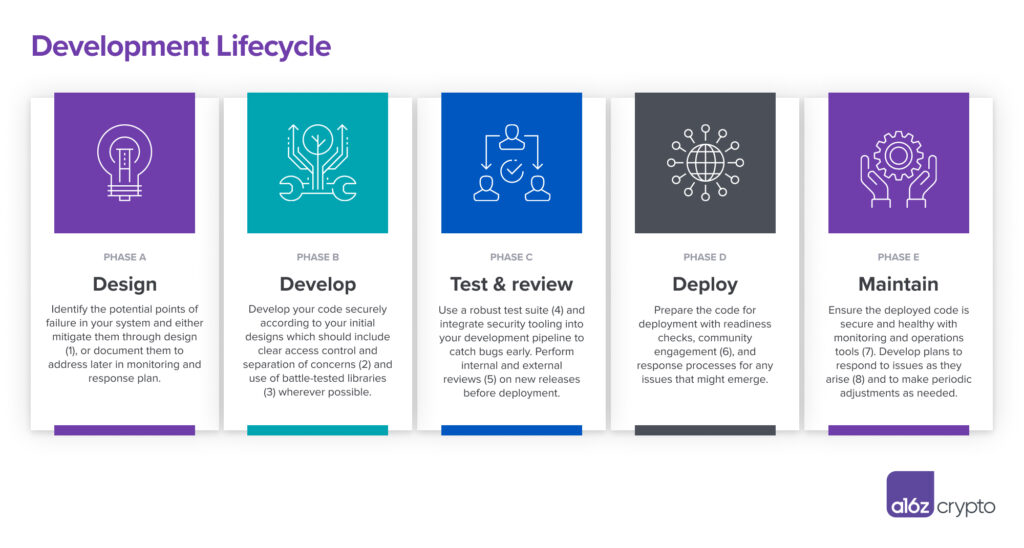
Effective monitoring is not a post-deployment afterthought. It spans the entire development lifecycle, from initial design and testing to post-deployment operations. By treating monitoring as a continuous defensive mechanism, teams can catch property violations during execution rather than after a breach. This holistic approach aligns with industry best practices that emphasize security at every stage of the contract's life.
Implementation checklist
Deploying a monitoring strategy requires more than just installing software; it demands a structured workflow that catches anomalies before they become exploits. This checklist provides the concrete steps to build a resilient defense for your smart contracts.
Start by identifying which contracts hold the most value or control critical logic. Establish specific thresholds for what constitutes an anomaly, such as unusual token transfers or rapid state changes. Without clear parameters, alerts will either be ignored or cause alert fatigue.

Connect your monitoring system to reliable node providers that offer real-time access to blockchain events. You need immediate visibility into transaction execution, contract interactions, and state updates to react quickly to potential threats. Delayed data means delayed response, which often results in total loss.
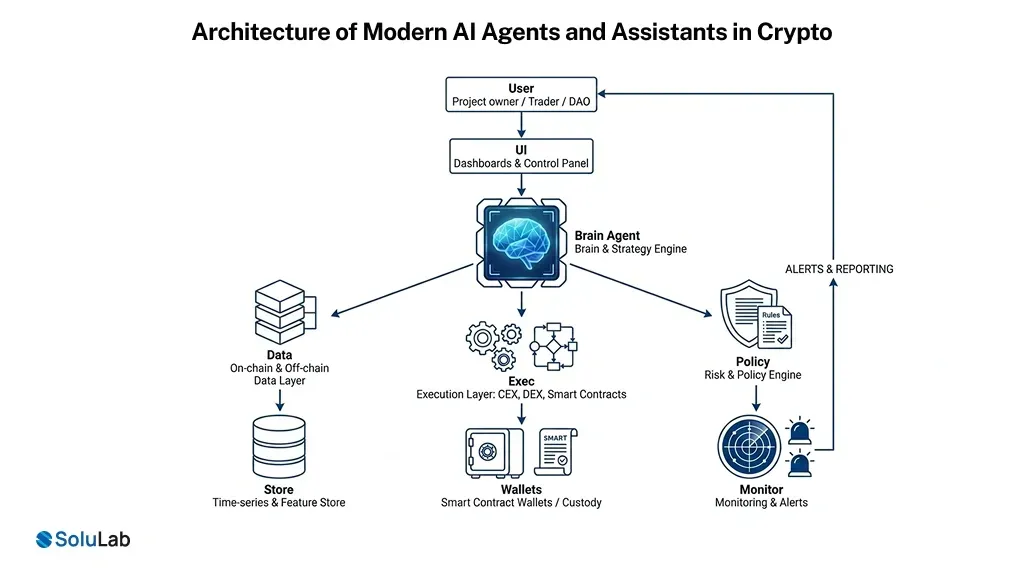
Set up automated notifications that trigger based on your defined thresholds. Ensure these alerts reach the right security engineers immediately via channels like Slack or PagerDuty. Manual review processes are too slow for high-stakes security incidents; automation is your first line of defense.
Before going live, backtest your detection rules against historical blockchain data. This helps you verify that your rules catch known attack patterns without generating excessive false positives. It also ensures your system can handle the volume of data during peak network activity.
Define clear procedures for different types of detected anomalies. Who authorizes a pause? How do you communicate with the community? A pre-defined playbook reduces decision-making time during a crisis, allowing your team to act decisively rather than reactively.
This structured approach transforms monitoring from a passive activity into an active security layer. By following these steps, you ensure that your smart contracts are not just deployed, but actively protected against the evolving threats of 2026.
Common questions about monitoring
Can ChatGPT audit smart contracts?
AI tools like ChatGPT have demonstrated strong code parsing capabilities, with recent studies showing they can identify functional relationships and write usable proof-of-concept exploits in 60% of cases. However, relying on AI for final security validation is risky. It lacks the contextual understanding of complex economic incentives and state dependencies that human auditors provide. Use AI for initial code review and pattern recognition, but always pair it with rigorous manual auditing and formal verification.
Is Solidity still in demand in 2026?
Yes, Solidity remains the dominant language for Ethereum-compatible chains. Job market data indicates that Solidity developer roles consistently outnumber alternatives like Move by a factor of 3–5. While new languages are emerging, the vast majority of existing smart contracts and developer tooling are built on Solidity. For 2026, mastering Solidity is still the most practical path for entering Web3 security and development.
What is a basic monitoring strategy example?
A robust monitoring strategy combines real-time event tracking with historical analysis. For instance, an e-commerce platform might track customer satisfaction through regular surveys, but a smart contract monitors on-chain events like token transfers and governance votes. The key is defining specific thresholds—such as a sudden spike in large transfers—that trigger alerts. This allows teams to react to anomalies before they escalate into major security incidents or financial losses.
Helpful gear
Use these product recommendations as a starting point, then choose the size, material, and price point that fit how you actually use the gear.


As an Amazon Associate, we may earn from qualifying purchases.
No comments yet. Be the first to share your thoughts!