Why smart contract monitoring matters now
Smart contracts are immutable by design, which means a single vulnerability can result in total loss of funds. Passive auditing provides a snapshot of security at a specific moment, but it cannot account for the evolving threat landscape of 2026. Attackers are increasingly using automated tools to probe for weaknesses that auditors might have missed or that emerged after deployment.
Active monitoring acts as a continuous security layer, detecting anomalies in real time. Unlike one-time audits, monitoring tools track on-chain activity, identifying suspicious transactions, unusual gas usage, or potential exploit attempts as they happen. This shift from reactive to proactive security is essential for mitigating risk in high-stakes DeFi environments.
The cost of downtime or exploits is no longer just financial; it erodes trust in the entire protocol. Without continuous oversight, teams are left blind to critical issues until damage is done. Effective monitoring infrastructure allows for rapid response, potentially stopping an attack before it drains liquidity.
As the DeFi ecosystem matures, the expectation for security has shifted. Users demand transparency and resilience, which requires more than just a clean audit report. It demands a robust monitoring strategy that operates 24/7, providing visibility into contract behavior and immediate alerts when thresholds are breached.
Core Infrastructure Components
Effective smart contract monitoring relies on a stack that moves data from the blockchain to your team without delay. This infrastructure isn't just about storing history; it's about catching anomalies the moment they happen. The system generally breaks down into three layers: data ingestion via RPC nodes, event parsing, and alerting pipelines.
RPC Nodes and Data Ingestion
The foundation of any monitoring setup is the RPC (Remote Procedure Call) node. This is your direct line to the blockchain. While public nodes work for casual checks, production-grade monitoring requires dedicated, high-throughput endpoints to handle the volume of requests needed for real-time tracking. You need nodes that offer WebSocket support, allowing for persistent connections that push new block data to your listeners immediately, rather than polling for updates.
Event Listeners and Parsing
Smart contracts emit events—structured logs that record state changes. These events are the primary signal for monitoring. An event listener subscribes to these logs, filtering for specific signatures and topics. The goal here is to translate raw hexadecimal data into human-readable actions. For example, detecting a Transfer event with a specific amount or recipient. Tools like Tenderly or custom scripts parse these events to trigger downstream logic. Understanding event signatures is critical; misinterpreting a log entry can lead to false positives or missed security incidents.
Alerting Pipelines
Once an event is parsed, it must trigger an alert. This pipeline connects your data sources to your team's communication channels, such as Slack, PagerDuty, or email. The alerting logic should be configurable, allowing you to set thresholds for unusual activity. For instance, a sudden spike in transaction volume or a transfer to a known malicious address. The alerting system acts as the final line of defense, ensuring that when something unusual happens, the right people are notified immediately.
Top monitoring tools compared
Choosing the right smart contract monitoring platform depends on your specific workflow. Some teams need deep transaction simulation, while others prioritize automated execution or simple event tracking. The following comparison breaks down three leading options: Tenderly, OpenZeppelin Defender, and Circle.
Tenderly
Tenderly excels at real-time transaction simulation and debugging. It is ideal for teams that need to understand why a transaction failed before it hits the mainnet. Its monitoring features integrate closely with its testing suite, allowing you to catch issues early. The platform offers robust alerting for specific contract states and transaction hashes.
OpenZeppelin Defender
OpenZeppelin Defender focuses on operational security and automated execution. It is designed for teams managing live protocols who need to react quickly to on-chain events. Defender allows you to create custom monitors that trigger automated actions, such as pausing a contract or executing a rescue function. It supports a wide range of chains and integrates seamlessly with OpenZeppelin's security tools.
Circle
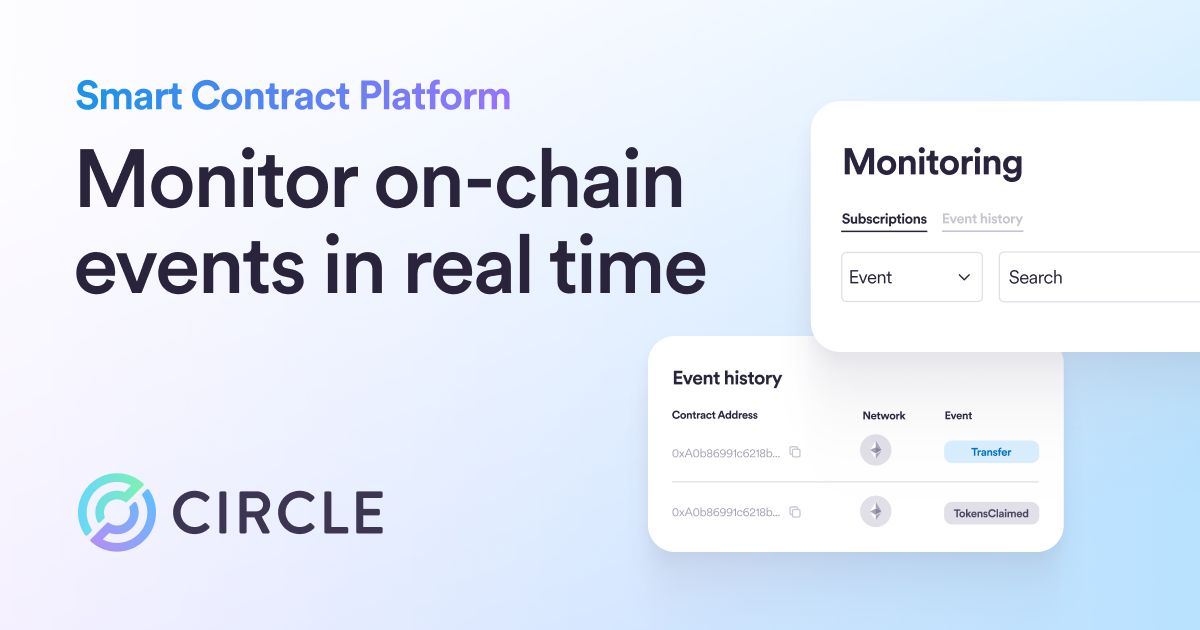
Circle provides a streamlined approach to monitoring, particularly for teams already using its stablecoin infrastructure. Its monitoring tools are designed to be easy to set up, with clear documentation and quickstart guides. Circle's platform focuses on visibility into token transfers and contract interactions, making it a solid choice for projects centered around USDC or other Circle-issued assets.
Comparison Table
The table below summarizes the core differences between these platforms to help you decide which fits your stack.
| Tool | Primary Strength | Chain Support | Integration Ease |
|---|---|---|---|
| Tenderly | Simulation & Debugging | Multi-chain | High |
| OpenZeppelin Defender | Automation & Security | Multi-chain | Medium |
| Circle | Stablecoin Focus | EVM | High |
Choosing the Right Fit
If your priority is debugging complex transaction failures, Tenderly's simulation capabilities are unmatched. For teams that need to automate responses to on-chain events, OpenZeppelin Defender offers the most robust execution layer. If your project is heavily tied to Circle's ecosystem, their native monitoring tools provide the simplest path to visibility.



As an Amazon Associate, we may earn from qualifying purchases.
Setting up effective alerts
Noise is the enemy of security. If every minor transaction triggers a notification, you will eventually ignore the warnings that matter. Effective smart contract monitoring requires filtering for high-signal events—such as large transfers, ownership changes, or state modifications—while ignoring routine activity.
1. Define your critical events
Start by identifying which contract interactions pose a risk. Not every event is worth monitoring. Focus on:
- Ownership changes: Transfers of admin privileges.
- Large value movements: Transfers exceeding a specific threshold.
- State changes: Modifications to critical contract variables.
OpenZeppelin Defender allows you to build customized Monitor templates that target these specific events, ensuring you only see what impacts your contract’s security posture. [[src-serp-1]]
2. Set realistic thresholds
Arbitrary thresholds lead to false positives. Use historical data to determine what constitutes "large" or "unusual" for your specific contract. If your protocol typically handles 100 ETH in a day, an alert for 500 ETH is useful; an alert for 101 ETH is not. Adjust these limits based on actual usage patterns rather than generic benchmarks.
3. Filter by contract address
Avoid monitoring the entire blockchain. Instead, filter alerts to your specific contract addresses. This reduces noise significantly and ensures your alerts are relevant. Most monitoring tools allow you to specify which contracts to watch, preventing you from being overwhelmed by unrelated on-chain activity. [[src-serp-4]]
4. Test your alert configurations
Before going live, test your alerts in a staging environment. Simulate the critical events you defined in Step 1 and verify that you receive the expected notifications. This step is crucial for catching misconfigurations, such as incorrect event signatures or overly restrictive filters, before they impact your security operations.
Best practices for 2026
Smart contract security is no longer a one-time check at deployment. As the attack surface expands with new chain architectures and interoperability protocols, maintaining operational excellence requires a continuous, layered defense strategy. The goal is to shift from reactive patching to proactive resilience, ensuring that your code can withstand not just known exploits, but novel vector attacks.
Automate continuous monitoring
Static analysis is the baseline, but it misses context-specific logic errors. In 2026, the standard is continuous integration pipelines that run dynamic analysis and fuzzing on every commit. Tools like Slither and Mythril should be integrated directly into your CI/CD workflow, flagging vulnerabilities before they reach the testnet. This "shift-left" approach catches issues when they are cheapest to fix, preventing the costly post-deployment audits that define legacy security models.
Implement defense-in-depth
Relying on a single audit is a single point of failure. Best practice now involves defense-in-depth: combining formal verification for critical mathematical invariants with manual peer reviews for business logic. Additionally, use access control patterns that are modular and upgradeable, but only when absolutely necessary. Prefer immutable contracts where possible, as upgradability introduces its own vector for admin key compromise. If upgrades are required, use proxy patterns with multi-sig governance and timelocks to prevent unilateral changes.
Monitor on-chain activity
Deployment is not the end of the lifecycle. You must monitor live contracts for anomalous behavior, such as unusual gas consumption patterns or unexpected state changes. Set up alerts for large value transfers or interactions with known malicious addresses. This real-time visibility allows you to pause operations or trigger emergency measures before an exploit drains funds. The landscape changes daily; your monitoring infrastructure must evolve at the same pace.
No comments yet. Be the first to share your thoughts!