Smart contract monitoring limits to account for
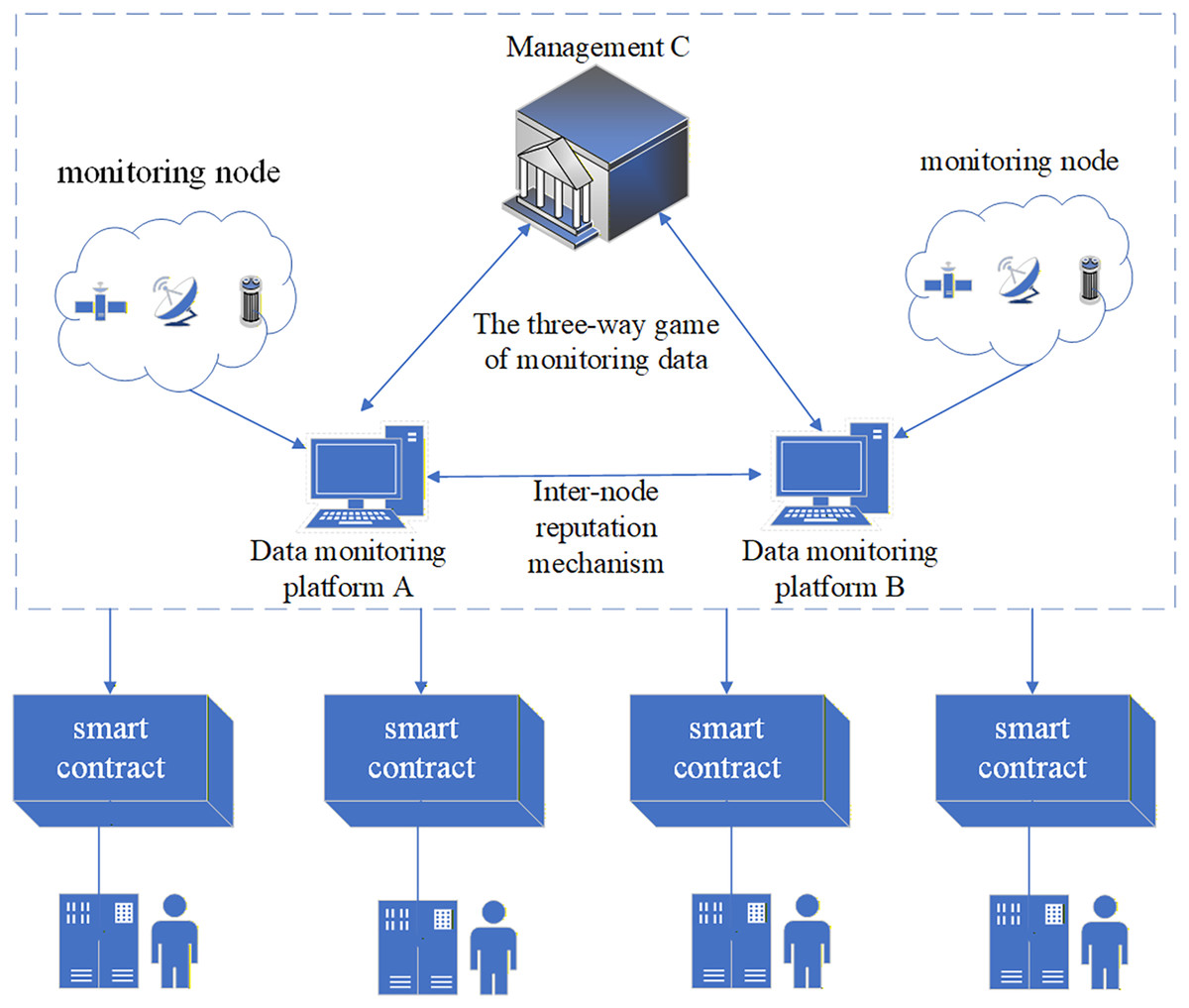
Effective smart contract monitoring is not a single tool but a layered defense system. You must track on-chain transactions, detect anomalous event logs, and verify state changes in real time. The primary challenge lies in the sheer volume of data across multiple chains and the need to distinguish between routine activity and genuine threats.
Event Log Filtering
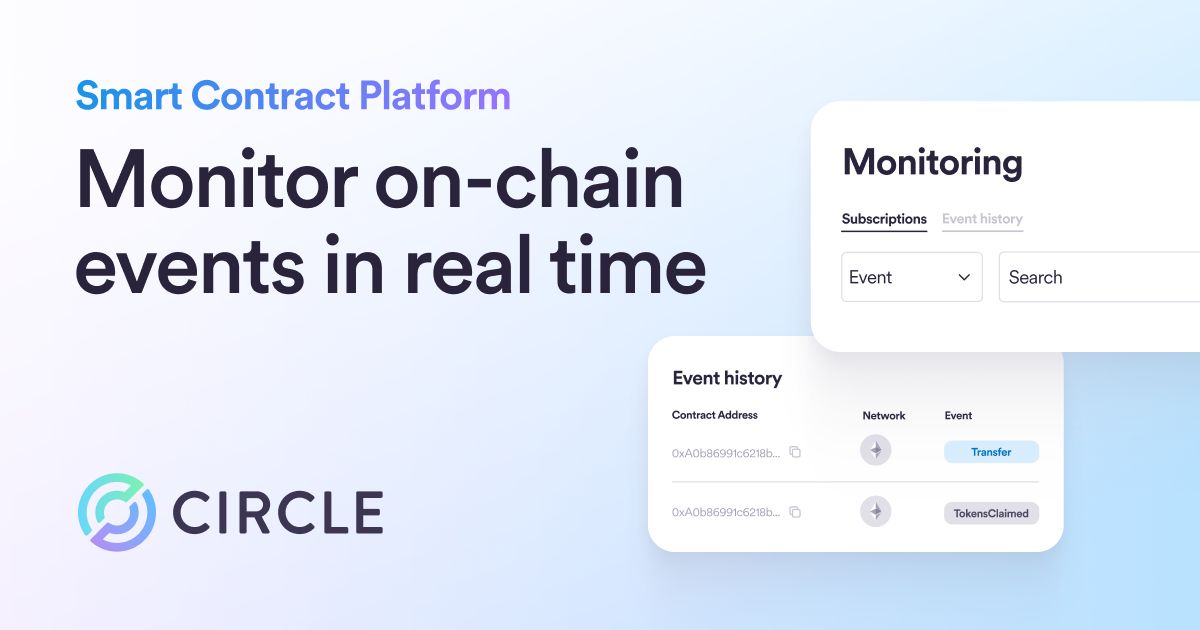
Monitoring relies on filtering specific event logs emitted by contracts. You need to track functions like Transfer, Approval, or custom security events such as OwnershipTransferred. OpenZeppelin Defender provides templates for these common patterns, allowing you to set thresholds for unusual activity. For example, a sudden spike in Transfer events to new addresses might signal a drain attempt.
Cross-Chain Consistency
Monitoring across multiple chains requires consistent logic. A vulnerability exploited on Ethereum might be replicated on Polygon or Arbitrum. You must ensure your monitoring scripts run on all relevant networks with identical parameters. Inconsistent coverage creates blind spots where attackers can operate undetected. Official documentation from providers like OpenZeppelin emphasizes the importance of standardized monitoring templates across chains to maintain security posture.
Latency and Response Time
The speed of detection directly impacts loss mitigation. If your monitoring infrastructure has high latency, an attacker may have already drained funds before you receive an alert. You need low-latency nodes and efficient alerting mechanisms. Consider using dedicated RPC providers for critical contracts to ensure fast block confirmation and immediate event processing. This reduces the window of opportunity for exploiters.
Smart contract monitoring choices that change the plan
Choosing a monitoring strategy requires balancing visibility, cost, and technical complexity. There is no single perfect tool; instead, you must evaluate how each approach handles chain-specific constraints and alert latency. The right setup depends on whether you prioritize real-time detection or comprehensive historical analysis.
On-chain vs. Off-chain Monitoring
On-chain monitoring embeds logic directly into the smart contract. This method, often called inline monitoring, provides the highest level of trust because the verification happens within the blockchain state itself [src-3]. It is ideal for critical security functions where external reliability is unacceptable. However, it increases gas costs for every transaction and permanently alters the contract’s codebase, making upgrades more complex.
Off-chain monitoring relies on external services to index and analyze blockchain data. Tools like OpenZeppelin Defender or Circle’s monitoring APIs track events and transactions without modifying the contract code [src-1][src-4]. This approach is cheaper and more flexible, allowing for rapid iteration of alert rules. The tradeoff is a reliance on third-party infrastructure and a slight delay in data availability compared to native chain events.
Latency vs. Coverage
Real-time alerts are essential for stopping active exploits, but they often come with limited chain coverage. High-priority monitoring services typically focus on major EVM chains like Ethereum and Arbitrum, where liquidity and risk are highest. Lower-priority or niche chains may only be supported by off-chain indexers with higher latency.
When evaluating tools, check their supported networks and update frequency. A service that offers 100% coverage on 50 chains but updates every hour is less useful for security than a service with 20% coverage but sub-second latency on the top 5 chains. Prioritize the chains where your contracts actually hold value.
Cost Structure
Monitoring costs vary significantly based on the volume of transactions and the depth of analysis. On-chain monitoring costs are tied to gas fees, scaling linearly with contract usage. Off-chain services often charge based on API calls or indexed data volume.
For high-frequency contracts, off-chain indexing can become expensive if not optimized. Conversely, low-traffic contracts may find on-chain monitoring too costly for minimal benefit. Evaluate your expected transaction volume and choose a pricing model that aligns with your operational budget.
| Factor | On-Chain | Off-Chain | Hybrid |
|---|---|---|---|
| Trust | Highest | Medium | High |
| Gas Cost | High | Low | Medium |
| Latency | Instant | Seconds/Minutes | Fast |
| Flexibility | Low | High | Medium |
| Complexity | High | Low | Medium |
Choose the Next Step: Turn Research Into a Practical Decision Framework
Smart contract monitoring is not a single tool but a layered defense strategy. To move from theory to execution, you must select components that address specific risks in your deployment environment. This framework prioritizes actionable checks over abstract concepts, ensuring your infrastructure can detect and respond to threats in real time.
Before deploying new tools, map every external function and state variable in your contracts. Identify which functions are critical to business logic and which are exposed to public interaction. This audit reveals where monitoring gaps exist, such as unmonitored admin functions or vulnerable oracle integrations.

Implement a service like OpenZeppelin Defender to track on-chain activity. Configure custom monitor templates to alert on specific events, such as large token transfers or unexpected ownership changes. Real-time visibility allows you to react to exploits before they drain significant funds.
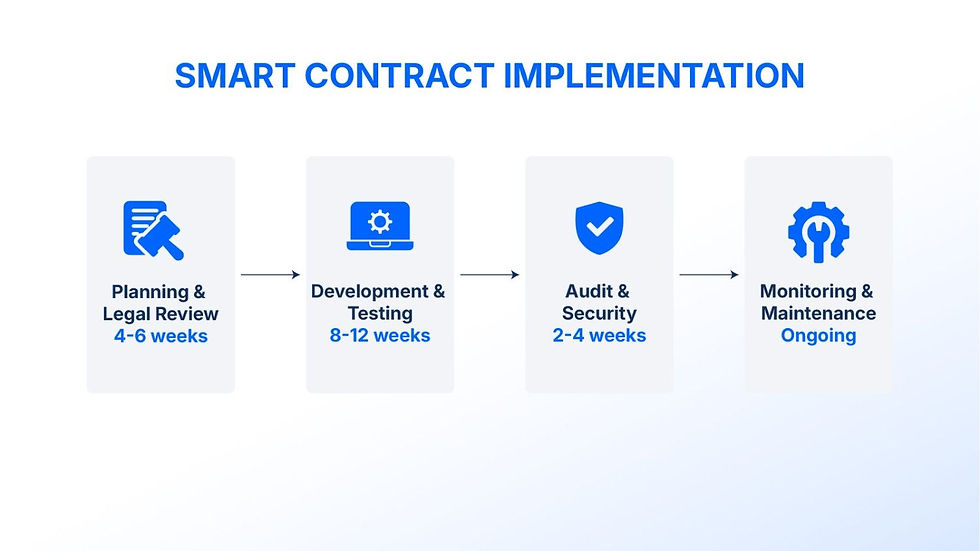
Embed static analysis tools into your CI/CD pipeline. Tools like Slither or Mythril can catch common vulnerabilities, such as reentrancy or integer overflows, before code reaches the mainnet. This step shifts security left, reducing the cost and risk of post-deployment patches.
Define clear actions for when alerts trigger. Determine who has the authority to pause contracts, revoke permissions, or execute emergency fixes. Document these procedures and test them regularly. A fast, coordinated response can limit damage during an active exploit.



As an Amazon Associate, we may earn from qualifying purchases.
By following these steps, you build a monitoring system that is proactive rather than reactive. Each layer addresses a different aspect of security, from pre-deployment code quality to post-deployment threat response. This structured approach ensures your smart contracts remain secure as the Web3 landscape evolves.
Watchouts: Weak Options and Misleading Claims
Smart contract monitoring is often oversold as a plug-and-play fix. In reality, many off-the-shelf dashboards lack the depth needed for high-stakes environments. They offer surface-level transaction tracking but miss the nuanced state changes that signal exploits. Relying solely on generic alerts creates a false sense of security, leaving critical vulnerabilities undetected until it is too late.
A common mistake is conflating event monitoring with comprehensive state auditing. Tools that only log standard ERC-20 transfers or basic contract calls fail to capture complex logic flaws. For instance, a reentrancy attack might not trigger a standard "transfer" event in the way a simple dashboard expects. Without custom logic or deeper RPC access, these events slip through the cracks, rendering the monitoring tool effectively blind to the actual threat vector.
Another trap is the reliance on unverified third-party data aggregators. These services often cache data or introduce latency, which is unacceptable when seconds matter during a live exploit. Official sources like OpenZeppelin Defender provide more reliable, direct on-chain monitoring capabilities, but even these require careful configuration. Always verify the source of your data and ensure your monitoring stack is built on primary, low-latency RPC endpoints rather than aggregated, potentially stale feeds.
Finally, beware of tools that promise "one-click" security. Smart contract security is not a product; it is a process. No single tool can replace rigorous testing, formal verification, and continuous human oversight. Focus on building a layered defense strategy where monitoring is just one component, not the entire solution. Prioritize clarity and control over convenience to truly protect your assets.
No comments yet. Be the first to share your thoughts!