Why monitoring matters now
A smart contract audit is a snapshot in time, not a permanent shield. Once your code goes live, it faces a continuous barrage of automated attacks, evolving exploit vectors, and market-driven anomalies. Static analysis tools can catch syntax errors and known vulnerability patterns, but they cannot predict how your contract will behave under the chaotic conditions of a live blockchain environment.
Monitoring acts as the immune system for your protocol. It detects suspicious transactions, unusual gas usage, or unauthorized state changes in real-time. Without this layer of operational visibility, you are reacting to hacks after the funds are drained, rather than stopping them as they happen. The OWASP Smart Contract Top 10 highlights that threats like reentrancy and access control failures remain prevalent precisely because runtime behavior often diverges from development assumptions.
Consider the market context: volatility drives activity, and activity drives attacks. When capital flows rapidly, monitoring infrastructure must scale to match. This is why leading teams integrate tools from providers like Tenderly and OpenZeppelin directly into their CI/CD pipelines, ensuring that every transaction is scrutinized against a baseline of normal behavior.
The cost of inactivity is measured in lost capital and eroded trust. By treating monitoring as a core component of your infrastructure rather than an afterthought, you shift from a reactive posture to a proactive defense. This distinction separates protocols that survive their first year from those that become cautionary tales.
The technical backbone of contract monitoring
Monitoring a smart contract isn't just about watching a dashboard; it's about building a nervous system that reacts to the blockchain's raw data. Before you select a tool, you need to understand the three pillars that make real-time detection possible: RPC nodes, event logs, and invariant tracking.
RPC nodes: The data pipeline
Your RPC (Remote Procedure Call) node is the foundation. It’s the bridge between your monitoring logic and the blockchain state. If your node is slow or unresponsive, your alerts will arrive too late to matter. In high-stakes environments, redundancy is non-negotiable. You should run multiple nodes from different providers to ensure that a single point of failure doesn't blind your system. Think of this as your primary data ingestion layer—without clean, low-latency access to the latest block headers and state roots, nothing else works.
Event logs: The signal in the noise
Blockchain data is heavy, but you don't need to parse every transaction. Event logs are the standardized way contracts communicate significant state changes. By indexing these logs, you filter out the noise and focus on the signals that actually move value or change control. This is where efficiency meets precision. Tools like Tenderly excel here by allowing you to subscribe to specific event signatures, ensuring you only trigger alerts when critical functions are called. Understanding event signatures is crucial for optimizing your data redundancy and avoiding the cost of processing irrelevant transactions.
Invariant tracking: The safety net
While event logs tell you what happened, invariant tracking tells you if the outcome is valid. Invariants are the unbreakable rules of your protocol—total supply must equal the sum of all balances, or a vault's value must always exceed its liabilities. Monitoring these mathematical truths in real-time catches logic errors and exploits that event logs might miss. It’s the difference between seeing a transaction and understanding its impact. This layer of monitoring is essential for catching drift before it becomes a disaster.
The volatility of the underlying asset directly correlates with the value at risk. When prices swing, the pressure on protocol invariants increases, making real-time monitoring not just a best practice, but a financial necessity.
Top tools for event tracking
When a smart contract executes, the real action happens in the logs. If you aren't listening, you're flying blind. The market has settled on three primary platforms for tracking these events: OpenZeppelin Defender, Tenderly, and Circle. Each handles the noise of on-chain activity differently, and choosing the right one depends on whether you prioritize developer workflow, deep debugging, or institutional-grade stability.
OpenZeppelin Defender
Defender is the standard for teams that want to move fast without sacrificing security. It integrates directly into your development environment, allowing you to set up monitors that trigger automated actions—like pausing a contract or executing a transaction—when specific conditions are met. It supports a wide range of chains and offers a straightforward interface for defining event filters. For teams already using OpenZeppelin for audits or upgrades, Defender feels like a natural extension of your stack rather than a separate tool.
Tenderly
Tenderly excels in visibility. It doesn't just alert you to events; it provides a full simulation environment to understand why an event fired. If a transaction reverts or behaves unexpectedly, Tenderly lets you replay the exact state of the blockchain at that moment. This makes it the go-to choice for debugging complex interactions or tracking invariant violations across multiple chains. It’s particularly useful when you need to catch incidents before they impact users, offering granular control over alerts for balances, events, and contract drift.
Circle
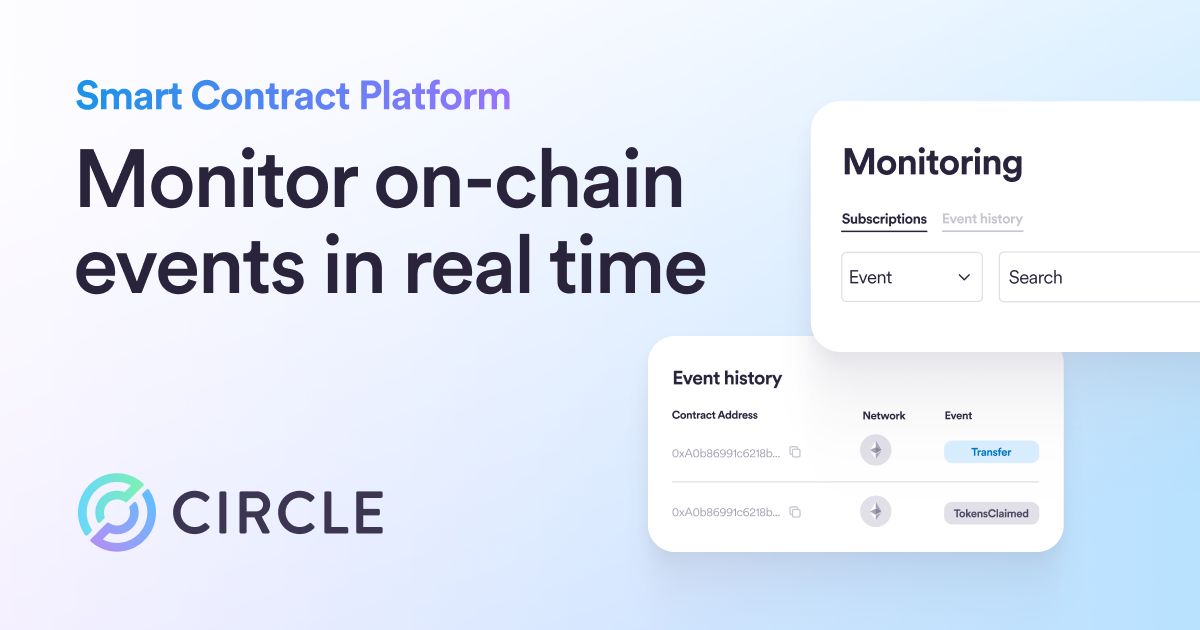
Circle focuses on simplicity and reliability for USDC-centric workflows. Their monitoring tools are designed to be lightweight and easy to integrate, making them ideal for projects that need to track stablecoin flows without managing heavy infrastructure. The interface is clean and direct, prioritizing ease of use over the deep debugging features found in Tenderly. If your primary concern is tracking USDC transfers and maintaining clear visibility into stablecoin movements, Circle provides a robust, low-friction solution.
Side-by-side comparison
| Feature | OpenZeppelin Defender | Tenderly | Circle |
|---|---|---|---|
| Primary Use Case | Automated response & security | Deep debugging & simulation | Stablecoin tracking & simplicity |
| Chain Support | Multi-chain (EVM) | Multi-chain (EVM) | Multi-chain (EVM) |
| Alerting Granularity | High (custom triggers) | Very High (invariants, drift) | Medium (event-based) |
| Integration Depth | Developer workflow native | Simulation & replay native | API & webhook native |
Technical context matters when monitoring high-stakes contracts. A sudden spike in gas or unusual transaction patterns often precedes a larger issue. Watching the broader market can provide early warnings that raw contract logs might miss.
Build a noise-free alert workflow
Most teams drown in alerts before they ever face an exploit. The difference between a manageable inbox and a crisis is how you configure your smart contract monitoring. You need to shift from passive logging to active, signal-rich notifications.
Start by defining your critical events. Generic transaction logs are useless for security. Focus on high-impact actions: large token transfers, ownership changes, or calls to sensitive functions like mint or pause. OpenZeppelin Defender allows you to monitor smart contract transactions across chains, but only if you build a customized Monitor template that filters out the noise. Read their tutorial on building monitors to see how to set these specific filters.
Next, establish a tiered escalation path. Not every alert requires a 2 AM page. Categorize alerts by severity:
- Info: Standard block confirmations or low-value transfers. Store these for audit trails.
- Warning: Unusual gas usage or failed transactions. Notify your dev team via Slack.
- Critical: Large value movements or function calls matching known exploit patterns. Trigger immediate PagerDuty alerts and freeze mechanisms if possible.
Use Tenderly’s simulation features to test your alert logic before it goes live. You can simulate a transaction and see exactly how your monitoring script reacts without risking real assets. This "dry run" prevents false positives from triggering panic responses.
Finally, verify your RPC health. An alert is worthless if your node is down. Set up a separate, lightweight health check for your RPC endpoints. If the node fails, the alert system should notify you of the infrastructure failure, not just the contract activity.
Identify the specific function signatures and token thresholds that matter. Ignore standard transfers. Focus on transferOwnership, mint, or any function moving more than your set threshold.
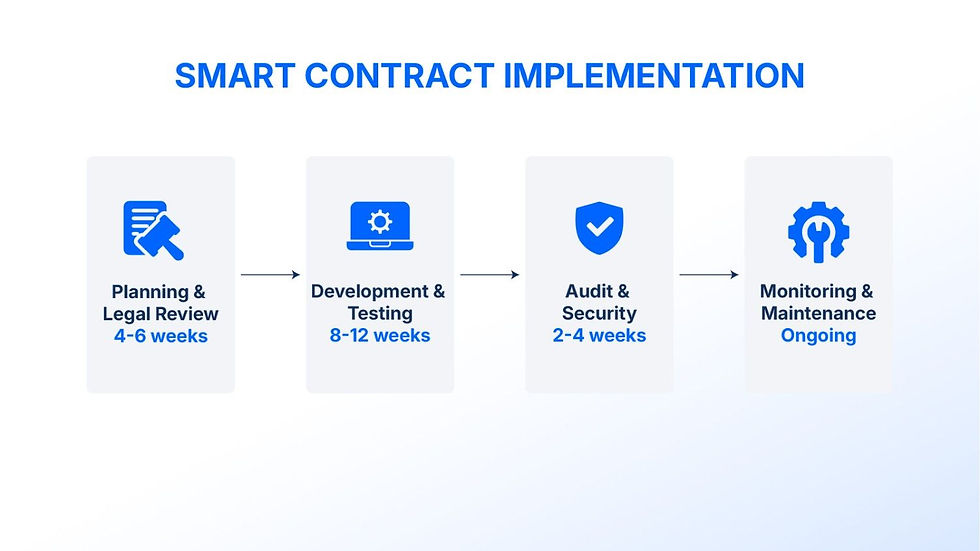
Map each event type to a communication channel. Low severity goes to a logging database. High severity triggers Slack and PagerDuty. This ensures the right people are woken up only when necessary.

Use Tenderly to simulate malicious or edge-case transactions. Verify that your alerts trigger correctly and that your escalation path works before you deploy to mainnet.
Set up a separate health check for your RPC nodes. If the node goes down, you need to know immediately, independent of contract activity.
| Severity | Action | Channel |
|---|---|---|
| Info | Log for audit | Database |
| Warning | Notify team | Slack |
| Critical | Immediate response | PagerDuty |
Avoid common smart contract monitoring pitfalls
Even the best monitoring stack fails if the underlying strategy is flawed. Many teams treat monitoring like a fire-and-forget deployment, ignoring how quickly threat vectors evolve. Without regular calibration, your tools become noise generators rather than early warning systems.
Alert fatigue from over-monitoring
Setting up too many rules is a classic trap. If every minor gas spike or failed transaction triggers an alert, your team will eventually ignore them all. This phenomenon, known as alert fatigue, masks genuine threats in a sea of false positives. Focus on high-impact metrics: large value transfers, unexpected function calls, and changes in contract state that deviate from historical norms. Use tools like Tenderly to filter out routine noise, keeping your attention on anomalies that actually matter.
Ignoring off-chain data
Smart contracts exist on-chain, but they don't operate in a vacuum. Relying solely on on-chain logs misses critical context. Price feeds, oracle updates, and off-chain governance votes often trigger the conditions for on-chain exploits. If your monitoring ignores the data sources your contracts depend on, you are blind to the triggers of potential attacks. Integrate off-chain data streams into your monitoring dashboard to see the full picture.
Static thresholds
Market conditions change. A threshold that makes sense during low volatility might be useless during a flash crash. Static monitoring rules fail to adapt to shifting network conditions. Regularly review and adjust your thresholds based on current network activity and market volatility. Use provider-backed widgets to track real-time gas prices and token values, ensuring your alerts remain relevant and actionable.
Frequently asked: what to check next
Helpful gear
Use these product recommendations as a starting point, then choose the size, material, and price point that fit how you actually use the gear.


As an Amazon Associate, we may earn from qualifying purchases.
No comments yet. Be the first to share your thoughts!