
Why monitoring matters now
Smart contract security isn't just about writing bug-free code; it's about surviving the moment after deployment. Once a contract goes live, it becomes an immutable asset on the blockchain. Unlike traditional software, you cannot simply patch a vulnerability or roll back a transaction. The stakes are absolute: a single exploit can drain millions in liquidity, as seen in recent high-profile DeFi breaches.
This guide focuses on the infrastructure required to detect and respond to threats in real time. We are moving past static audits and into the realm of active monitoring. Tools like Tenderly and OpenZeppelin Defender provide the visibility needed to track contract state changes, monitor gas usage, and trigger automated responses to suspicious activity. Without this layer of observability, you are flying blind.
The scope of this guide covers the critical post-deployment phase. We will examine the specific tools and setups that allow developers to maintain control over their contracts. From setting up alerting systems to integrating with official security standards, you need a robust monitoring strategy to protect user funds and maintain trust. The market value at risk is significant, making proactive defense not just a best practice, but a financial necessity.
Core monitoring infrastructure
Building a smart contract monitoring stack starts with the data layer. You need reliable access to blockchain state and transaction history. This means running your own nodes or using managed RPC providers like Alchemy, Infura, or QuickNode. These services expose the JSON-RPC API, allowing your application to query balances, trace transactions, and listen for real-time events. For high-throughput environments, consider using WebSocket endpoints to receive notifications as blocks are finalized, rather than polling HTTP endpoints at intervals.
The next layer is the event listener. Smart contracts emit events—structured logs that record state changes on-chain. Tools like Tenderly or custom scripts using Web3.js or Ethers.js subscribe to these events. When a contract executes a function like Transfer, the event logs the from, to, and amount addresses. Indexing these logs into a database (such as PostgreSQL or Elasticsearch) transforms raw blockchain data into queryable records. This separation of concerns—keeping the chain as the source of truth and your database as the query layer—is critical for performance.
Finally, you need a visualization and alerting layer. This is where you define the rules. If a specific address moves more than a certain threshold, or if a contract function is called outside business hours, your system triggers an alert. This can be an email, a Slack message, or an automated transaction reversal. The goal is to reduce the time between an on-chain event and your team's awareness of it.
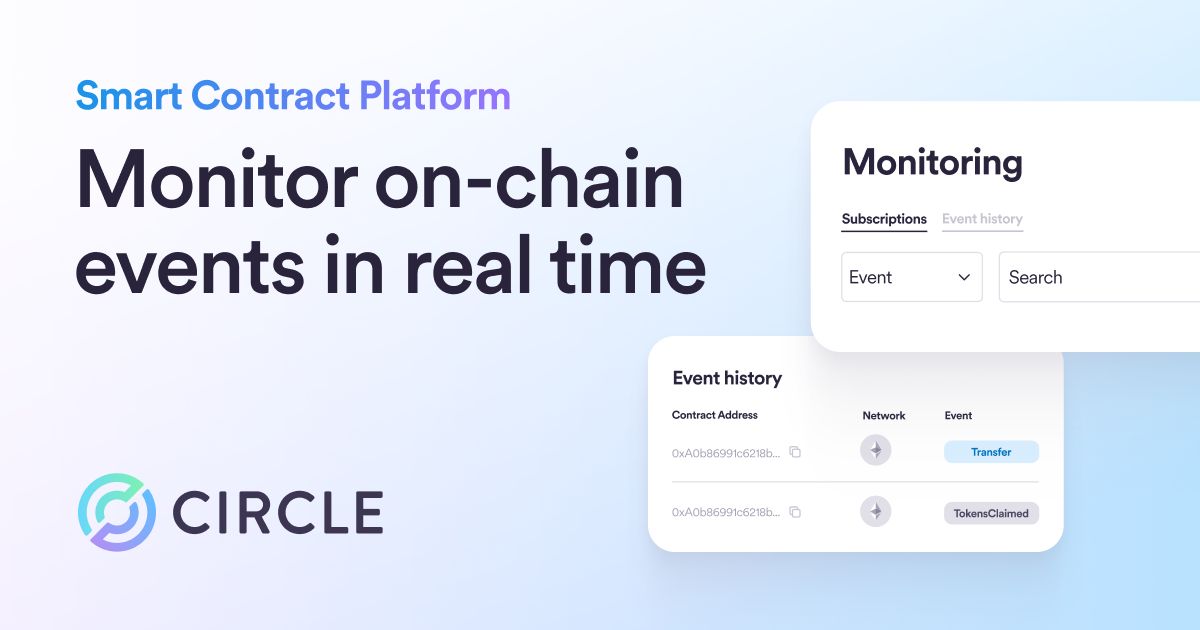
Top smart contract monitoring tools
Choosing the right monitoring stack depends on whether you need deep transaction tracing, automated execution capabilities, or simple on-chain event tracking. The following tools represent the current standard for developers and security engineers managing high-stakes smart contracts.
OpenZeppelin Defender
Defender is the industry standard for operational security, offering a unified interface for managing smart contract lifecycles. Its Monitor feature allows you to track on-chain activity by subscribing to specific contract events or transaction types across multiple chains. Once an event triggers, Defender can execute predefined actions, such as sending an alert or triggering a transaction via a Safe or a dedicated executor account.
The platform shines in its ability to handle complex logic. You can write custom JavaScript handlers to filter noise and only act on high-value interactions. This is particularly useful for treasury management or governance systems where false positives are costly. Defender integrates seamlessly with OpenZeppelin's other tools, making it a natural choice for teams already using their SDKs.
Tenderly
Tenderly focuses on the developer experience, providing a powerful forked environment for testing and monitoring. Its monitoring capabilities allow you to set up alerts for specific contract interactions, state changes, or gas usage patterns. Unlike basic event listeners, Tenderly can validate every response before taking action, ensuring that the contract behaves as expected in real-time.
The tool is especially valuable for debugging. When an alert triggers, you can instantly view the transaction simulation, including the full state of the blockchain at that moment. This context helps security engineers understand exactly why a transaction failed or succeeded, reducing the time spent investigating incidents. Tenderly supports a wide range of EVM-compatible chains, making it versatile for multi-chain deployments.
Circle's Monitoring Features
Circle offers specialized monitoring tools designed for USDC and other tokenized assets. Their monitoring platform simplifies tracking smart contract activity related to stablecoin flows, providing clear visibility into liquidity movements and user interactions. This is particularly useful for DeFi protocols that rely heavily on stablecoin liquidity.
The platform includes a quickstart guide with code snippets, allowing developers to integrate monitoring capabilities quickly. Circle's approach is more focused on asset-specific metrics rather than general contract logic. If your protocol's primary risk involves stablecoin reserves or liquidity pools, Circle's tools provide a straightforward way to keep an eye on these critical components.
Comparison
The following table compares the core features of these tools to help you decide which fits your infrastructure.
| Tool | Primary Focus | Supported Chains | Alerting Capabilities |
|---|---|---|---|
| OpenZeppelin Defender | Execution & Security | Multi-chain (EVM + Solana) | Event triggers, custom handlers |
| Tenderly | Debugging & Simulation | Multi-chain (EVM) | State changes, gas usage, interactions |
| Circle Monitoring | Stablecoin Flows | Multi-chain (EVM + Solana) | Liquidity movements, user interactions |
Build a monitoring strategy
A monitoring strategy turns raw on-chain data into actionable intelligence. Without structured alerts, you are reacting to incidents after they have already drained funds. The goal is to detect anomalies early, filter out noise, and trigger the right response protocol.
Define alert thresholds
Start by identifying the critical parameters for your contract. For a token contract, this might include large transfer volumes or unexpected minting events. For a lending protocol, focus on liquidation thresholds and oracle price deviations.
Set thresholds based on historical data and stress tests. Avoid static percentages; use dynamic thresholds that adjust to network congestion or volatility. OpenZeppelin Defender allows you to create custom monitor templates that watch for specific transaction signatures and event logs across multiple chains.
Configure automated alerts
Connect your thresholds to an alerting system. Email is too slow for high-stakes exploits. Use PagerDuty, Slack webhooks, or SMS for critical failures. Ensure your alert messages include the transaction hash, block number, and affected contract address so your team can investigate immediately.
Test your alerting pipeline with a small amount of capital or on a testnet. Verify that the latency between the on-chain event and the alert notification is within your acceptable risk window. If your strategy relies on Tenderly’s simulated execution, ensure the simulation triggers are robust enough to catch reverts before they happen on mainnet.
Integrate incident response
Monitoring is useless without a response plan. Define clear roles: who approves a pause function? Who communicates with the community? Who coordinates with block explorers or security firms?
Implement a "kill switch" mechanism if your contract design allows it. This could be a multi-sig controlled pause function that stops all state-changing transactions. Ensure your monitoring alerts trigger this pause automatically if certain conditions are met, such as a known exploit signature or a massive drain event.
Regularly review and update your strategy. As your contract evolves and new attack vectors emerge, your monitoring parameters must adapt. Integrate with official sources like OpenZeppelin’s Defender docs or Circle’s stability alerts to stay ahead of known vulnerabilities.
Common monitoring pitfalls
Even with robust infrastructure, smart contract monitoring fails when the alerting logic doesn't match the threat landscape. The most frequent mistake is over-alerting. When your dashboard screams at you for every minor state change or low-value transaction, you develop alert fatigue. Critical warnings get buried in noise, and by the time a human engineer notices, the exploit is already in progress. Configure thresholds based on actual risk, not just arbitrary volume limits.
Another critical error is relying solely on third-party monitoring tools without understanding the underlying data. Services like Tenderly or Etherscan provide excellent visibility, but they are mirrors, not the source of truth. If a node provider delays block propagation or filters events differently, your external monitor might miss a reorg or a failed execution until it's too late. Always cross-reference external alerts with your own node's raw logs for high-stakes contracts.
Finally, many teams ignore edge cases in their monitoring queries. A monitor that only tracks successful transactions will never see a reverted call that indicates a failed state transition or a potential denial-of-service attempt. Ensure your queries include status=0 (reverted) events and track gas consumption anomalies. As noted by OpenZeppelin, post-deployment security requires continuous, comprehensive observation of all contract interactions, not just the happy path.
Frequently asked: what to check next
How much does smart contract monitoring cost?
Costs vary by infrastructure scope. OpenZeppelin Defender offers a free tier for basic monitoring, suitable for personal projects or small teams. Tenderly provides a generous free plan with limited transaction traces, scaling up as your dApp grows. For enterprise-grade needs, self-hosted solutions like Tenderly or custom indexer stacks (e.g., The Graph) incur infrastructure costs proportional to your block data volume.
Can monitoring tools catch every smart contract vulnerability?
No. Monitoring tools detect runtime anomalies and policy violations but do not replace static analysis or formal verification. They are defensive mechanisms that flag deviations from expected behavior, such as unexpected token transfers or unauthorized state changes. As noted in the Smart Contract Security Field Guide, monitors are reactive; they alert you when a property breaks, rather than preventing the break from occurring in the first place.
What is the latency like for real-time alerts?
Latency depends on the node provider and the tool's architecture. Tenderly and similar services typically offer sub-second latency for transaction detection, enabling near-instant alerts for liquidity movements or user interactions. However, block confirmation times still apply. For high-stakes finance, combine real-time monitoring with on-chain validation steps to ensure alerts are legitimate before triggering automated responses.
Helpful gear
Use these product recommendations as a starting point, then choose the size, material, and price point that fit how you actually use the gear.


As an Amazon Associate, we may earn from qualifying purchases.
No comments yet. Be the first to share your thoughts!