Why monitoring matters now
Smart contract audits are essential, but they are not a finish line. An audit is a detailed analysis of code at a specific moment in time, designed to preemptively identify security vulnerabilities before deployment Chainlink. However, the blockchain environment is dynamic. New attack vectors emerge daily, and smart contracts often interact with other protocols that were not part of the original audit scope. Relying solely on a static security report leaves your assets exposed to evolving threats.
Passive auditing cannot detect active exploits as they happen. Real-time monitoring is critical for asset protection because it provides immediate visibility into on-chain activity. Without continuous oversight, you may not know that your funds are being drained until the transaction is irreversible. This is why infrastructure for 2026 must shift from retrospective analysis to proactive surveillance.
The cost of inaction is measured in millions. Recent DeFi exploits often stem from delayed detection of anomalous transaction patterns, allowing attackers to execute complex multi-step raids before defenders can react.
To protect capital, you need tools that monitor smart contracts continuously. This guide covers the essential infrastructure and tools required to maintain security in a high-stakes environment.
How EVM Event Monitoring Works
EVM chains don't broadcast raw transaction data to your dashboard; they emit structured logs. These logs are the primary signal for any smart contract monitoring system. When a contract executes, it writes data to the blockchain's receipt, creating an immutable record of state changes. Understanding this mechanism is the difference between reacting to a hack and preventing one.
Decoding Event Signatures
Every event in Solidity has a unique identifier called a signature, derived from the event's name and its parameter types. This signature is hashed into a 32-byte topic (Topic 0) that precedes the actual data. Monitoring tools use this hash to filter incoming logs efficiently. Without matching the correct signature, your system will ignore critical events like Transfer or OwnershipTransferred, leaving you blind to the very actions you need to track.
Interpreting Log Data
The raw data attached to a log is ABI-encoded, meaning it packs multiple variables into a compact byte stream. To make sense of it, you must decode the data using the event's definition. This process reveals the specific values involved in the transaction, such as token amounts or addresses. Ignoring this step results in unreadable hex strings that offer no actionable intelligence during a security incident.
The volatility of the underlying asset often correlates with increased contract activity. High-frequency trading or arbitrage bots trigger numerous events in short bursts. Monitoring infrastructure must handle this throughput without dropping logs, ensuring that every state change is captured for analysis.


As an Amazon Associate, we may earn from qualifying purchases.
Essential monitoring tools
You cannot protect what you cannot see. Smart contract monitoring tools provide the visibility needed to detect anomalies before they become insolvencies. The landscape splits into three functional categories: real-time alerting for immediate reaction, analytics for post-mortem investigation, and security scanners for pre-deployment validation. Choosing the right stack depends on your risk tolerance and the complexity of your contracts.
Real-time alerting
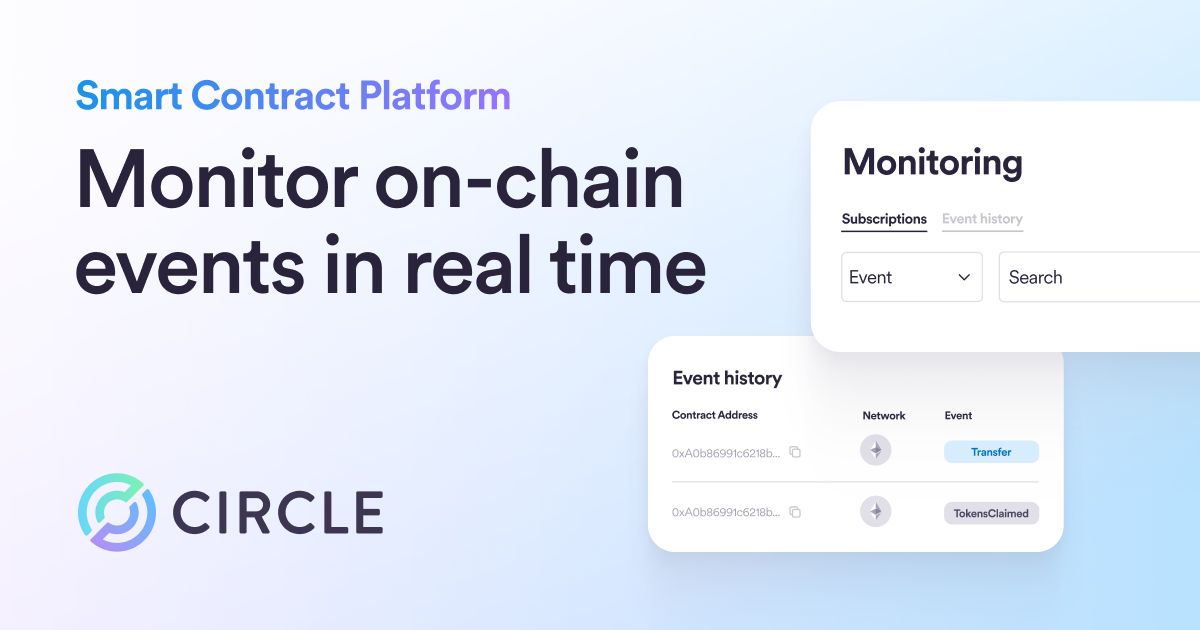
Real-time alerting acts as your early warning system. These tools listen to the mempool and block headers, triggering notifications via webhook, email, or SMS when specific conditions are met. This immediacy is critical for high-value operations. For instance, Circle’s monitoring infrastructure allows developers to track state changes and events directly from their contracts, enabling rapid response to unexpected behavior.
Analytics dashboards
Analytics tools aggregate on-chain data into readable formats. They answer questions about token flows, gas usage, and user activity over time. While not designed for instant reaction, they are indispensable for understanding contract performance and identifying slow-draining vulnerabilities. Dashboards from providers like Dune or Nansen allow you to visualize complex interactions that raw transaction logs obscure.
Security scanners
Pre-deployment security scanners analyze code for known vulnerability patterns. Tools like Slither or Mythril automate the detection of common issues such as reentrancy or integer overflows. These are not a substitute for human audit but serve as a necessary first line of defense. They catch low-hanging fruit that might otherwise slip through manual review, reducing the attack surface before funds are ever at risk.
Feature comparison
| Tool Category | Primary Function | Real-time Capability | Best For |
|---|---|---|---|
| Alerting | Immediate notifications | High | Active defense & incident response |
| Analytics | Historical data visualization | Low | Post-mortem & performance tuning |
| Scanners | Static code analysis | N/A | Pre-deployment risk reduction |
| Category | Speed | Focus |
|---|---|---|
| Alerting | Instant | Detection |
| Analytics | Delayed | Insight |
| Scanners | Batch | Validation |
Building your monitoring infrastructure
Setting up a monitoring stack for smart contracts is less about installing software and more about architecting a safety net that catches failures before they drain liquidity. In high-stakes environments, a missed event or a delayed alert is often the difference between a recoverable glitch and a total loss. You need a pipeline that ingests on-chain data, interprets it against your specific risk parameters, and routes alerts to the right people instantly.
Your monitoring system is only as reliable as the node it queries. Use a primary node for real-time event ingestion and a secondary, geographically distributed node for failover. If your primary node lags or drops blocks, your alerts will be stale. Configure your node to expose the eth_getLogs endpoint efficiently, as this is the primary source of truth for contract events. Ensure your node provider offers high availability guarantees, as downtime during a volatility spike is unacceptable.

Raw blockchain data is noisy. Instead of polling every block, use an indexer to parse and store specific event signatures relevant to your contracts. Focus on critical events like Transfer, OwnershipTransferred, or custom state-change events that signal potential exploits. Filter these events by address and topic to reduce data volume. This step transforms raw logs into structured data that your alerting engine can process in milliseconds, not minutes.
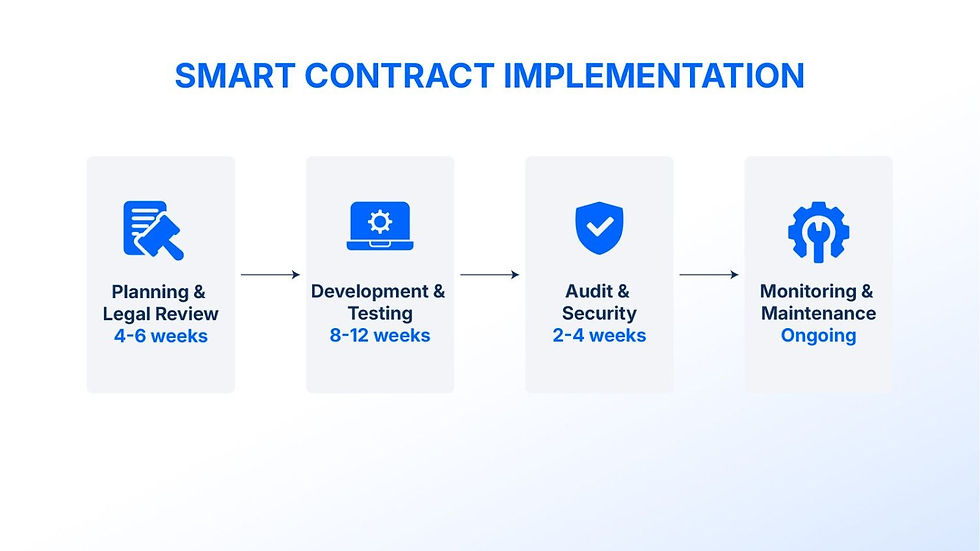
Not all alerts are equal. A failed transaction retry is a warning; a large unauthorized transfer is a critical incident. Set up tiered alerting channels: use email or Slack for low-priority notifications and PagerDuty or SMS for critical threats. Define clear thresholds for each alert type. For example, trigger an immediate critical alert if a transfer exceeds a certain token amount or if a contract’s ownership changes unexpectedly. Test these channels regularly to ensure they are active and reachable.
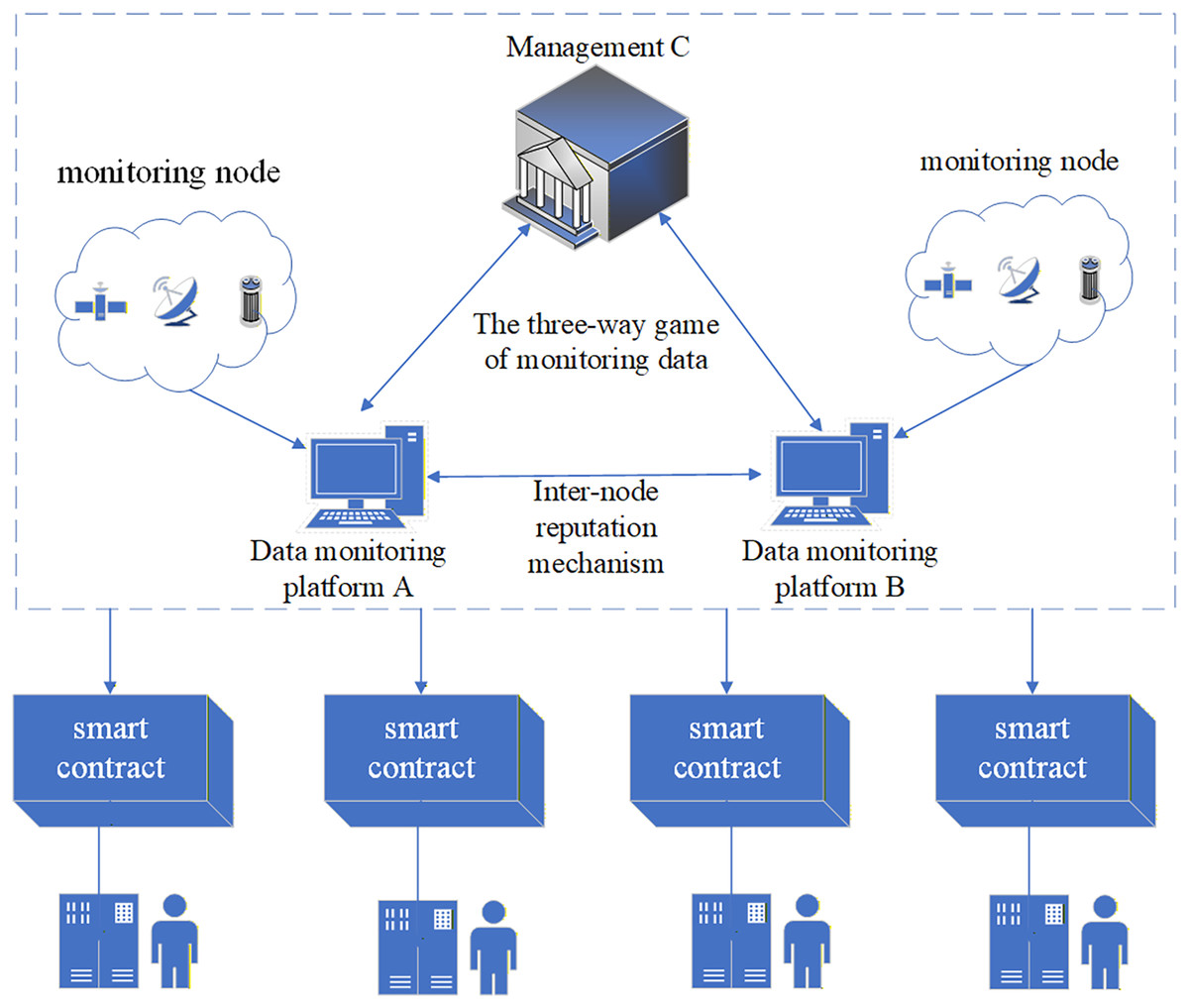
Before relying on your system in production, run a comprehensive test suite. Simulate attack vectors and normal operational changes to verify that your indexer captures the correct events and your alerts trigger appropriately. Use testnets to validate node connectivity and event filtering logic. A broken alert system is worse than no system, as it creates a false sense of security. Document your testing procedures so new team members can verify the stack’s integrity after updates.
-
Primary node health check passed
-
Secondary node failover tested
-
Event filters validated against contract ABI
-
Alert channels (Slack/PagerDuty) confirmed active
-
Testnet simulation completed successfully
Building this infrastructure requires precision, but it pays off by giving you visibility into your contracts’ behavior. When you know exactly what data is flowing and where it’s going, you can react to threats with confidence rather than panic.
Interpreting Anomalies Before They Become Exploits
Monitoring data is only as useful as your ability to read it. You are looking for deviations from the norm—patterns that suggest a contract is behaving in ways its documentation never promised. The goal is to spot the whisper before it becomes a scream.
Start with gas usage. A sudden spike in gas consumption for a standard operation often signals hidden loops or complex branching logic that attackers are exploiting. Conversely, unusually low gas might indicate a failed state change that was silently swallowed. These metrics are your first line of defense against logic bombs.
Next, track state changes. Look for unexpected transfers of ownership or sudden modifications to critical variables like owner or treasury_balance. If a function that should only modify temporary variables starts altering permanent storage, treat it as a critical alert. This is often where the exploit actually lives.
Finally, correlate these anomalies with market data. A smart contract exploit often coincides with unusual trading volume or price volatility. Use live price widgets to contextualize these events. If your monitoring system flags a state change while the asset price is spiking, you are likely looking at an active attack, not a bug.
No comments yet. Be the first to share your thoughts!