Why monitoring matters now
Smart contracts are immutable by design. Once code lands on the blockchain, you cannot patch it. This permanence turns every deployment into a high-stakes event where bugs are not just errors—they are liabilities. In 2026, the volume of value locked in decentralized finance (DeFi) protocols demands a shift from passive deployment to active, continuous monitoring.
Passive reliance on audits is no longer sufficient. Audits provide a snapshot of security at a single point in time, but they cannot predict how a contract will behave under changing market conditions or new attack vectors. Smart contract monitoring acts as the nervous system for your infrastructure, ingesting event logs and triggering alerts when anomalies occur. Without this layer, you are flying blind, unable to detect exploits until after the damage is done.
The economic stakes are visible in real-time. When a protocol is compromised, the speed of the drain is often measured in seconds, not minutes. Active monitoring allows teams to identify suspicious transactions, such as unusual gas spikes or unexpected state changes, before they escalate into catastrophic losses. This is not just about code quality; it is about risk management in a volatile environment.
Understanding market volatility is also part of the security equation. High gas fees during network congestion can mask malicious activity or prevent timely interventions. Monitoring tools must account for these economic factors to provide accurate situational awareness.
The baseline for security in Web3 is no longer "trust but verify." It is "monitor and respond." Integrating robust monitoring infrastructure is as critical as writing the contract itself, ensuring that your protocol can adapt to threats in real-time.
Core monitoring infrastructure
Smart contract monitoring relies on three distinct layers: event logs, transaction tracing, and alerting systems. These layers form the backbone of any serious monitoring strategy, allowing you to distinguish between raw on-chain data and the off-chain processing required to make that data actionable.
Event logs and transaction tracing
On-chain data is the source of truth, but it is noisy. Event logs provide structured records of state changes, such as token transfers or ownership updates. Transaction tracing goes deeper, capturing every internal call and storage modification, even if no event was emitted. Together, they offer a complete picture of contract behavior. Most monitoring techniques inject monitors directly into the contract as additional instructions, a method known as inline monitoring, which ensures no step is missed [[src-serp-3]].
Off-chain processing and alerting
Raw blockchain data is useless without off-chain processing. You need systems to ingest, normalize, and analyze this data in real time. Alerting systems then trigger notifications based on predefined conditions, such as unusual transaction volumes or failed state transitions. This separation of concerns—on-chain recording and off-chain analysis—is critical for maintaining performance and accuracy.
top smart contract monitoring tools
Choosing the right infrastructure depends on your stack and risk tolerance. The market has consolidated around two primary approaches: comprehensive security suites and specialized event monitoring services. Both are essential for high-stakes finance, but they serve different operational needs.
openzeppelin defender
OpenZeppelin Defender is the industry standard for automated contract management. It goes beyond passive monitoring to include active execution capabilities. You can set up custom monitors that trigger actions based on specific on-chain events, such as large token transfers or function calls. Its strength lies in integration with existing CI/CD pipelines and its robust support for EVM-compatible chains.
For teams building complex DeFi protocols, Defender offers a full suite of tools including relayers, schedulers, and admin controls. It is particularly effective for managing upgradeable contracts and maintaining security postures across multiple networks. The platform’s transparency and open-source roots make it a trusted choice for institutional players.
circle concave
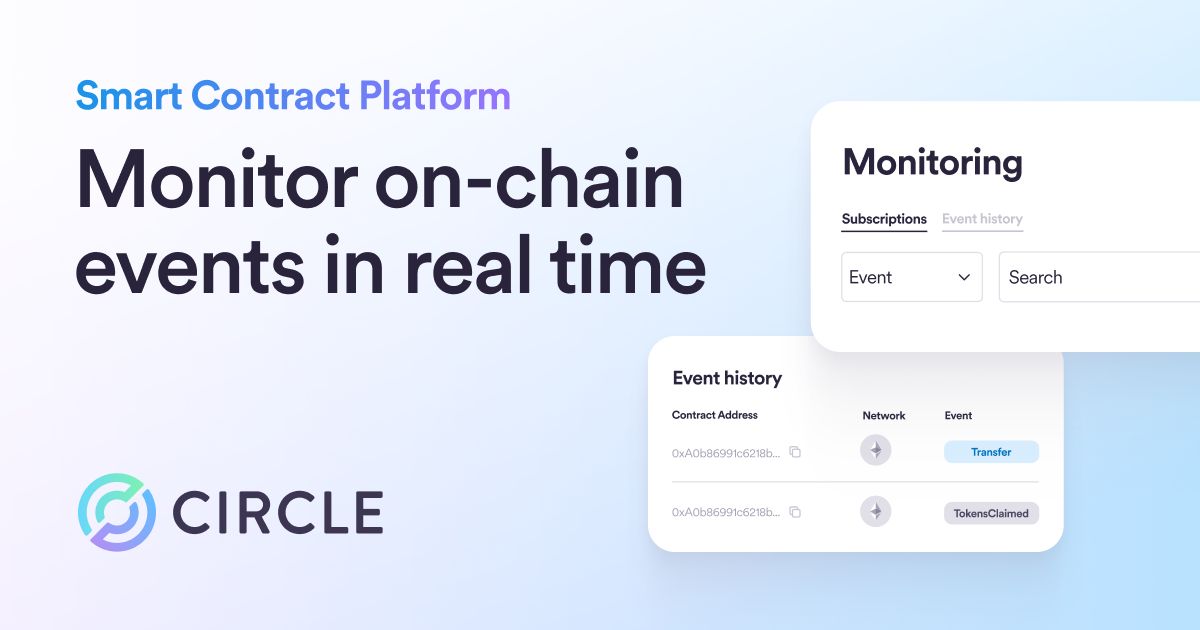
Circle Concave provides a more focused approach to smart contract activity. It specializes in real-time event monitoring and alerting, making it ideal for teams that need immediate visibility into contract behavior. Concave integrates seamlessly with Circle’s broader ecosystem, offering clean APIs and straightforward dashboards.
This tool is less about automation and more about observation. It excels at tracking specific transaction patterns and providing detailed logs for analysis. For projects that prioritize speed and simplicity in monitoring, Concave reduces the overhead of building custom alerting systems from scratch.
comparison table
The following table compares key features of leading monitoring tools to help you choose the right infrastructure.
| Tool | Primary Focus | Supported Chains | Integration Ease |
|---|---|---|---|
| OpenZeppelin Defender | Security & Automation | EVM (Multi-chain) | High (API/CLI) |
| Circle Concave | Event Monitoring | EVM (Multi-chain) | Medium (API) |
| Tenderly | Simulation & Debugging | EVM (Multi-chain) | High (SDK) |
| Moralis | Data Indexing | EVM (Multi-chain) | High (API) |
choosing your stack
If your priority is automated response and security management, OpenZeppelin Defender is the most robust option. It provides the infrastructure needed to not just watch, but act on contract data. For teams that need lightweight, real-time event tracking without the complexity of full automation, Circle Concave offers a streamlined alternative.
Consider your team’s technical resources. Defender requires more setup but offers greater control. Concave is easier to deploy but offers fewer customization options. Many projects use both, leveraging Defender for core security and Concave for specific monitoring needs.
recommended resources
For teams looking to enhance their monitoring capabilities, the following resources provide practical tools and guides.


As an Amazon Associate, we may earn from qualifying purchases.
Setting up effective alerts
Noise is the enemy of security. If your monitoring dashboard screams at you for every minor transaction, you will eventually ignore it when something actually matters. The goal is to configure triggers that filter out routine activity and highlight anomalies that could signal a compromise.
Start by identifying the specific event logs you need to watch. For ERC-20 tokens, the Transfer event is standard, but you should also monitor Approval events if your contract allows unlimited spending. OpenZeppelin Defender allows you to filter by these event signatures to ignore irrelevant transactions. This reduces the signal-to-noise ratio significantly by ignoring standard user activity.
Define a minimum value for transfers to trigger an alert. For example, ignore transfers under $1,000 unless they come from a known blacklisted address. This prevents your inbox from filling up with small, routine payments. Use the threshold feature in your monitoring tool to set these limits explicitly.
Critical events like OwnershipTransferred or AdminChanged require immediate attention. These events indicate a change in control over the contract. Set up a high-priority alert for these events that bypasses standard filtering. This ensures you are notified instantly if someone attempts to take control of your contract.
By focusing on specific triggers, you build a monitoring system that acts as a reliable early warning system rather than a source of distraction.
Build a monitoring strategy
Tools alone won't stop exploits. You need a strategy that turns event logs and alerts into action. Think of your infrastructure as the nervous system of your protocol: it detects pain (anomalies) and triggers a reflex (response) before damage spreads.
Map your contract's high-risk functions. Set alerts for large transfers, ownership changes, or unexpected state changes. Use official sources like the Consensys best practices guide to identify which events matter most for your specific architecture.
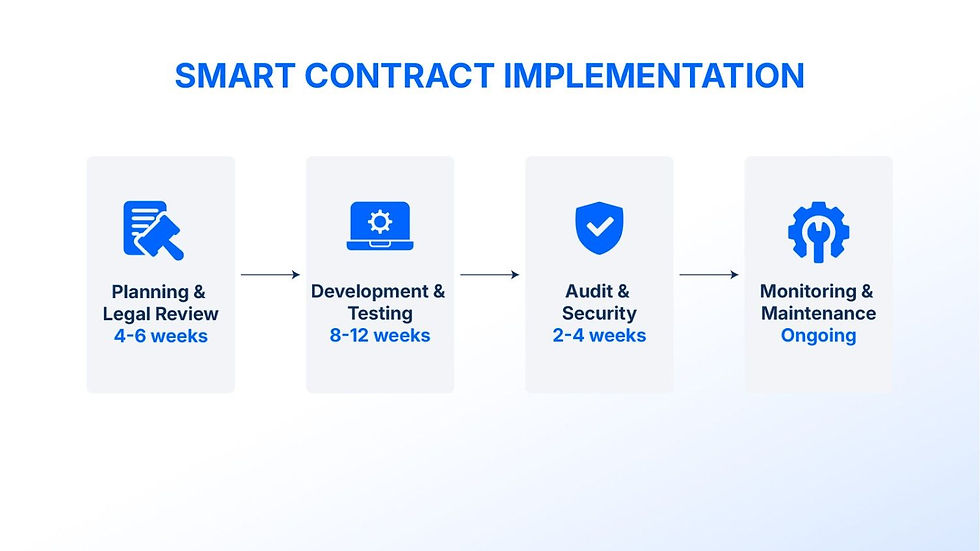
Connect your monitoring stack to live blockchain data. Whether using Infura, Alchemy, or a node provider, ensure your system ingests blocks with minimal latency. Delayed data means delayed reactions, and in smart contracts, seconds count.
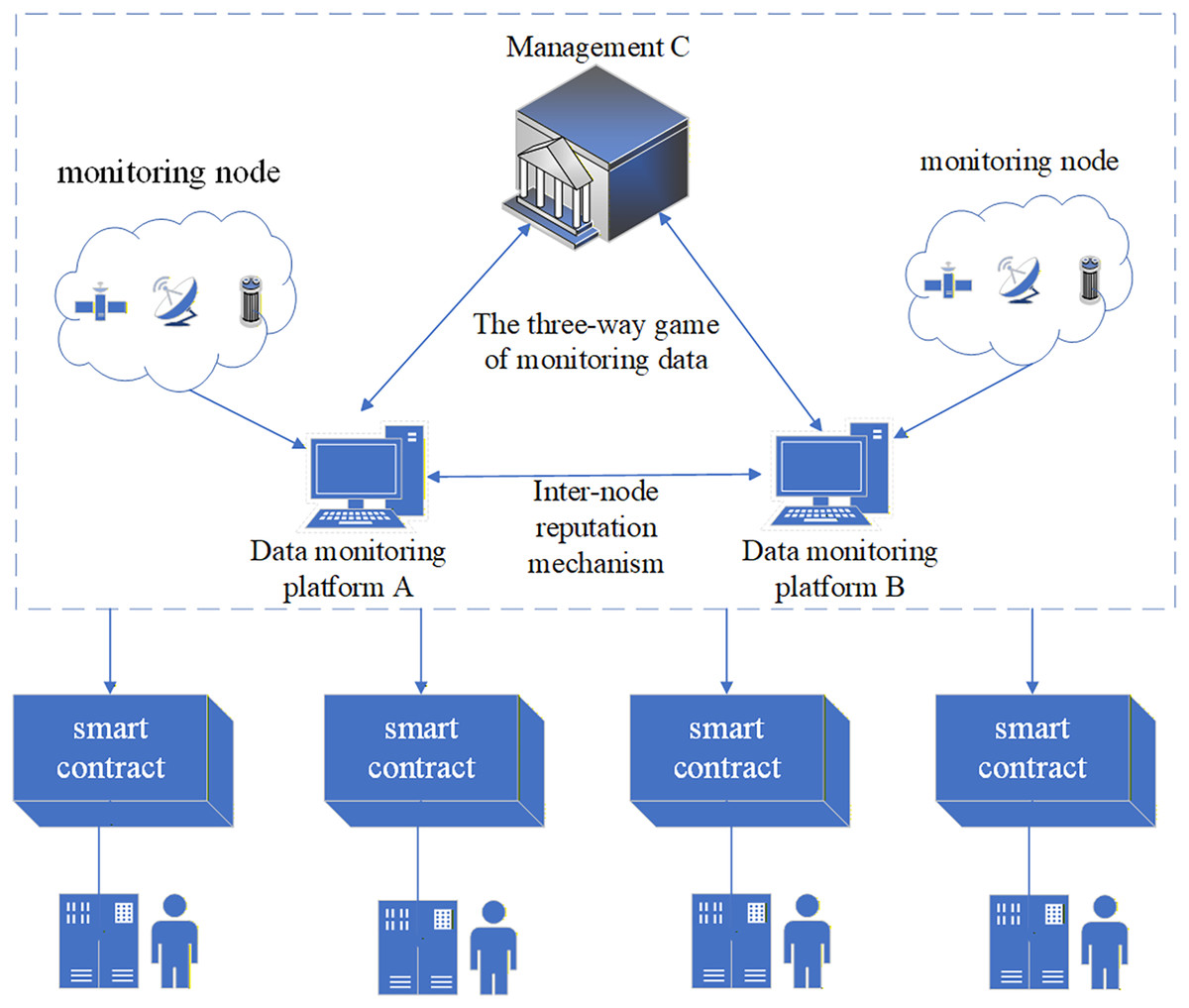
Don't rely on manual checks during an attack. Automate pause functions, blacklist addresses, or divert funds to safe vaults based on your trigger thresholds. Test these automated responses in a forked environment before they're needed in production.
Continuous improvement is non-negotiable. As your protocol evolves, so must your monitoring rules. Regularly review your alert history to tune sensitivity and reduce false positives. A well-tuned system doesn't just watch; it protects.
No comments yet. Be the first to share your thoughts!