Smart contract monitoring limits to account for
Effective smart contract monitoring requires balancing real-time visibility with infrastructure costs. You cannot watch every transaction on-chain without incurring prohibitive gas fees or node bandwidth limits. Instead, focus on monitoring specific event signatures and state changes that matter to your protocol’s logic.
The primary constraint is data redundancy. Emitting excessive log data bloats the blockchain state and increases deployment costs. Optimize your events to include only the essential parameters needed for off-chain analysis. This approach reduces on-chain storage while preserving the ability to reconstruct transaction history via log analysis tools.
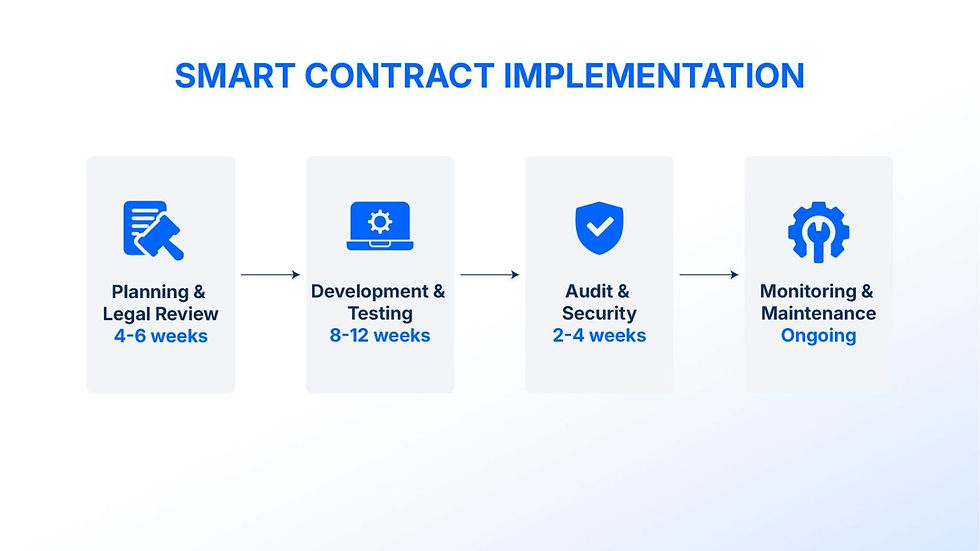
Post-deployment operations often reveal gaps in initial monitoring strategies. Designing for observability from the start—during the development and testing phases—prevents costly retrofits. Use official documentation to define clear event structures, ensuring that your monitoring stack can parse logs efficiently without unnecessary complexity.
Smart contract monitoring choices that change the plan
Choosing a monitoring stack requires balancing detection speed, data accuracy, and operational overhead. No single tool covers every edge case, so you must evaluate how each option handles the specific risks of your deployment. The decision often comes down to whether you prioritize real-time alerting for immediate threats or deep historical analysis for forensic audits.
Latency vs. Completeness
Real-time monitoring tools listen to mempool transactions and on-chain events as they happen. This setup allows you to react to exploits before they complete, but it often misses complex, multi-step attacks that rely on delayed execution or off-chain oracle updates. Conversely, batch-processing tools analyze blocks after finality. They provide a complete, error-free view of state changes but sacrifice the ability to stop an attack in progress. For high-value contracts, a hybrid approach—using real-time triggers for simple failures and batch analysis for complex logic—is usually necessary.
Cost vs. Granularity
Monitoring every event emitted by a smart contract generates significant data volume. On Ethereum, indexing all logs for a popular token can cost thousands of dollars monthly in node fees and storage. Many providers offer filtered monitoring, which reduces costs but risks missing subtle anomalies if the filter criteria are too narrow. You must decide which events are critical enough to justify the expense. For most projects, monitoring state changes and large transfers is sufficient; monitoring every minor interaction is rarely cost-effective unless you are running a decentralized exchange or lending protocol with high transaction volume.
Customization vs. Out-of-the-Box Utility
Custom-built monitors using tools like Hardhat or Foundry provide maximum flexibility. You can define exact properties that must hold during execution, as described in academic research on transaction monitoring [Capretto et al., 2022]. However, this requires significant engineering time to maintain and update as your contract evolves. Managed services offer pre-built dashboards and alerts that are easier to deploy but may not support custom logic or niche chain features. If your contract uses standard ERC-20 or ERC-721 interfaces, a managed service is often sufficient. For novel tokenomics or complex cross-chain bridges, custom solutions are typically required.
| Factor | Real-Time Tools | Batch Analysis | Custom Builds |
|---|---|---|---|
| Detection Speed | Immediate (mempool/block) | Delayed (post-finality) | Configurable |
| Data Accuracy | May miss delayed events | Complete and verified | Depends on logic |
| Operational Cost | High (node fees) | Moderate | High (engineering time) |
| Ease of Setup | Low | Medium | High |
Choose the next step
Smart Contract Monitoring works best as a clear sequence: define the constraint, compare the realistic options, test the tradeoff, and choose the path with the fewest hidden costs. That order keeps the advice usable instead of decorative. After each step, pause long enough to check whether the recommendation still fits the reader's actual situation. If it depends on perfect timing, unusual access, or a best-case budget, include a simpler fallback.
Watchouts: Misleading Claims and Weak Options
Smart contract monitoring tools often overpromise coverage while underdelivering on signal clarity. Many platforms claim "real-time" alerts but suffer from latency that allows exploits to complete before notifications trigger. This delay is especially dangerous for high-value DeFi protocols where seconds matter. Always verify the end-to-end latency of the monitoring stack against on-chain block times, not just the vendor's marketing copy.
Another common pitfall is the reliance on generic event signatures without context. As noted by SCSF, understanding event signatures is critical, but many tools simply dump raw logs into dashboards without filtering for relevant state changes. This creates noise fatigue, causing teams to miss subtle anomalies that precede major failures. A robust system should correlate events with specific contract states rather than treating all logs as equal.
Post-deployment operations are frequently treated as an afterthought. Hacken’s security guide emphasizes that monitoring is only one stage of a five-part lifecycle. If your monitoring solution doesn't integrate seamlessly with your testing and deployment pipelines, you'll be flying blind. Ensure your chosen tools support the full spectrum from design to post-deployment, rather than offering a fragmented view of the contract's health.
Smart Contract Monitoring FAQs
How do you monitor a smart contract after deployment? Monitoring involves continuous review of on-chain activity, event logs, and risk signals. Tools track state changes and transaction patterns to flag anomalies before they escalate into exploits or financial losses.
What are the best tools for smart contract monitoring? Effective monitoring relies on specialized platforms like Tenderly, OpenZeppelin Defender, or Forta. These tools provide real-time alerts, transaction simulation, and historical data analysis to maintain contract integrity.
Can smart contract monitoring prevent all hacks? No system guarantees absolute security. Monitoring detects suspicious patterns and enables rapid response, but it cannot stop exploits that bypass logic flaws entirely. It is a defensive layer, not a replacement for rigorous auditing.
How much does smart contract monitoring cost? Costs vary by provider and volume. Many platforms offer free tiers for basic monitoring, while advanced features like custom alerting, high-frequency transaction tracking, and enterprise support require monthly subscriptions.
Helpful gear
Use these product recommendations as a starting point, then choose the size, material, and price point that fit how you actually use the gear.


As an Amazon Associate, we may earn from qualifying purchases.
No comments yet. Be the first to share your thoughts!