Why monitoring matters for deployed code
An audit is a snapshot, not a shield. When you deploy a smart contract, you are releasing code into a live, adversarial environment that changes by the second. New vulnerabilities emerge in the underlying protocols, and attackers constantly adapt their strategies. Relying on a static security report from months ago is like locking your front door but leaving the windows open to a changing weather system. Post-deployment monitoring provides the runtime visibility necessary to catch anomalies before they become catastrophic.
Continuous monitoring allows you to detect suspicious activities or anomalies in real-time. Instead of waiting for a post-mortem analysis after funds have been drained, active monitoring tools can flag unusual transaction patterns, unexpected state changes, or gas spikes that signal an exploit in progress. This immediate awareness is critical for triggering emergency pauses, initiating incident response protocols, or simply alerting the community to potential threats.
To build an effective monitoring strategy, you need to look beyond simple balance checks. Focus on event signatures and contract interactions that deviate from the norm. For example, if a governance contract typically sees one vote per transaction, a sudden burst of multiple votes in a single block is a red flag. Tools like OpenZeppelin’s Defender or specialized blockchain analytics platforms can help you set up these custom alerts, ensuring you have eyes on the critical paths of your smart contract infrastructure.
The financial stakes make this non-negotiable. A single undetected vulnerability can lead to millions in losses, as seen in various high-profile DeFi exploits. Understanding the market environment where these vulnerabilities play out is essential for context.
Core Infrastructure for Event Tracking
Smart contract monitoring relies on the blockchain's event system, which serves as the primary interface between on-chain logic and off-chain observers. When a contract executes, it emits logs—compact data structures stored in the blockchain's state that record significant actions. These logs are the only reliable way to track state changes without re-executing every transaction, making them the backbone of any monitoring strategy.
Understanding Solidity Events
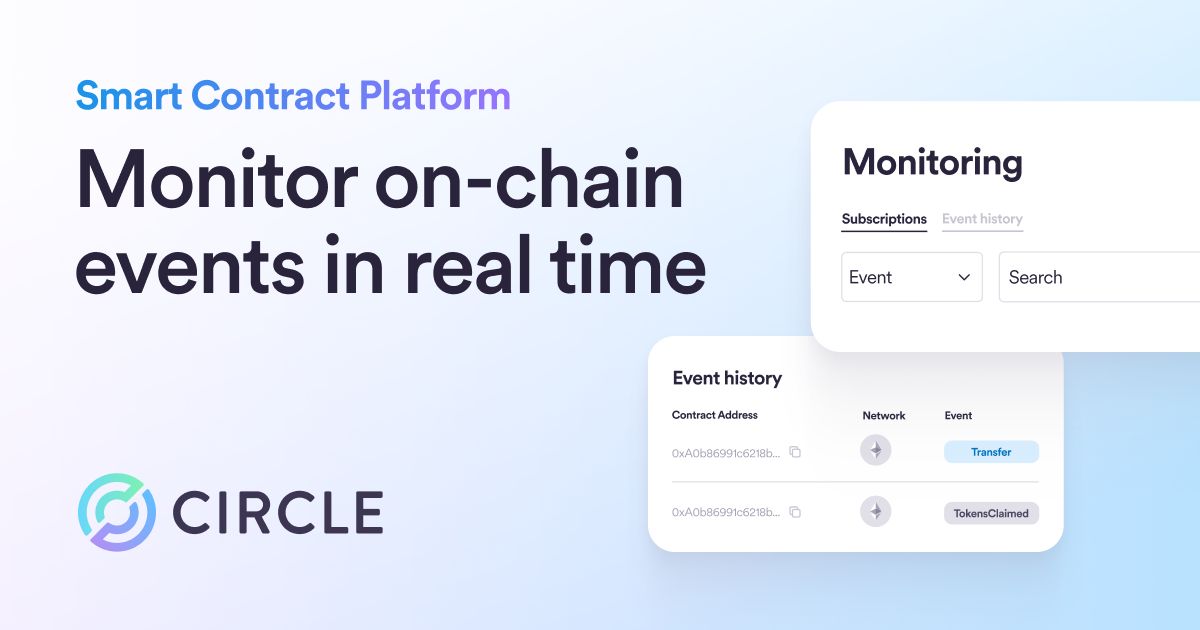
Events are declared in Solidity contracts using the event keyword. They are optimized for efficiency, storing only the data necessary for external systems to react. A well-designed event uses indexed parameters to allow for fast filtering by external indexers. For example, an OpenZeppelin ERC-20 transfer event might look like this:
event Transfer(address indexed from, address indexed to, uint256 value);
The indexed keyword marks these parameters for inclusion in the transaction receipt's topics, allowing indexers to quickly filter logs by sender or recipient without scanning the entire block. This structure is critical for performance, as it reduces the computational load on off-chain nodes.
Log Parsing and Off-Chain Indexing
While the blockchain stores the logs, most monitoring tools rely on off-chain indexing to make this data queryable. Services like The Graph or custom node setups parse these logs and store them in databases, enabling complex queries that the blockchain itself cannot support. This separation is vital: the blockchain provides the source of truth, while the indexer provides the usability.
When building your own infrastructure, you must decide between running your own node or using a provider like Infura or Alchemy. Running your own node gives you full control over the data stream but requires significant maintenance. Provider APIs offer ease of use but may introduce latency or rate limits. For high-stakes monitoring, a hybrid approach often works best: use a provider for standard data and a private node for critical, time-sensitive events.
On-Chain vs. Off-Chain Data
The distinction between on-chain and off-chain data is not just technical; it's architectural. On-chain data is immutable and secure but expensive to store and slow to query. Off-chain data is flexible and fast but requires trust in the indexer's integrity. A robust monitoring system acknowledges this trade-off, using on-chain data for verification and off-chain data for analysis.
For real-time alerts, you might listen to pending transactions (mempool) to catch events before they are confirmed. This approach is faster but riskier, as transactions can be dropped or replaced. For historical analysis, you rely on confirmed blocks and indexed data. Understanding this duality helps you build a monitoring stack that is both responsive and reliable.
Top smart contract monitoring tools
Choosing the right monitoring platform depends on your stack, budget, and the complexity of your alerting logic. While generic blockchain explorers provide raw data, specialized tools offer the context needed to react quickly to exploits or anomalies. Below is a comparison of the leading platforms that handle alerting, transaction tracking, and multi-chain support for developers and security engineers.
| Tool | Key Feature | Multi-Chain | Integration Ease |
|---|---|---|---|
| OpenZeppelin Defender | Custom Monitor Templates | Yes | High |
| Tenderly | Real-time Simulation | Yes | High |
| Moralis | Web3 API Suite | Yes | Medium |
| Dune Analytics | SQL-based Queries | Yes | Medium |
| Alchemy | Webhooks & Notify | Yes | High |
OpenZeppelin Defender remains the industry standard for teams already using the OpenZeppelin ecosystem. Its primary strength lies in its Monitor feature, which allows you to define custom logic using JavaScript or TypeScript. You can filter for specific event signatures, such as a large token transfer or a privileged function call, and trigger alerts via email, Slack, or PagerDuty. The platform supports multiple chains and integrates seamlessly with Defender’s AutoTask for automated responses, making it ideal for teams that need both visibility and remediation capabilities.
Tenderly excels in simulation and debugging. While it offers robust monitoring, its real-time transaction simulation engine is its standout feature. This allows you to test how your contract would react to a specific transaction before it is mined, effectively providing a "what-if" scenario for monitoring. It supports a wide range of EVM-compatible chains and offers a highly customizable dashboard. For security engineers, Tenderly’s ability to trace internal transactions and revert reasons provides deeper insight than standard event logging.
Alchemy Notify takes a simpler, webhook-first approach. If you prefer to build your own alerting logic on top of reliable infrastructure, Alchemy’s Notify service is a strong candidate. It monitors specific addresses or contracts for new blocks, transactions, or internal transactions. You configure the triggers, and Alchemy sends a webhook to your endpoint. This is less of a "black box" solution and more of a building block, giving you full control over how alerts are processed and who receives them.
Moralis and Dune Analytics cater to different monitoring needs. Moralis provides a comprehensive API suite that includes real-time data streams, useful for applications that need to react to on-chain events immediately. Dune, on the other hand, is less about real-time alerting and more about historical analysis and dashboards. While you can set up alerts for specific conditions, Dune’s strength is in querying large datasets to identify trends, such as whale movements or contract interactions over time. Use Dune for investigative monitoring and Moralis for application-level real-time data.
When selecting a tool, prioritize the ones that fit your existing workflow. If you are already using OpenZeppelin for development, Defender’s monitor templates will reduce friction. If you need deep debugging capabilities, Tenderly’s simulation engine is unmatched. For teams building custom alerting pipelines, Alchemy’s webhooks provide the reliability needed without locking you into a specific vendor’s dashboard.
Designing a monitoring strategy
A monitoring strategy isn't just about watching a dashboard; it's about creating a feedback loop between on-chain events and your incident response team. You need to define what matters before something breaks. This means mapping your contract's critical functions—like token transfers, ownership changes, and parameter updates—to specific alert channels.
Start by identifying the "blast radius" of each function. A routine balance check might warrant a daily summary, but a withdraw function needs real-time Slack or PagerDuty alerts. Use event signatures (like Transfer(address,address,uint256)) to filter noise. If you're tracking ERC-20 tokens, focus on high-value transfers or unusual minting events rather than every single transaction.
Thresholds are where human judgment meets automation. Setting a static limit for all transactions often leads to alert fatigue. Instead, use dynamic thresholds based on historical volume or a percentage of the total supply. For example, flag any single transfer that exceeds 1% of the circulating supply, or any new wallet receiving more than a set amount in a 24-hour window.
Integrate these alerts directly into your incident response workflow. When an alert fires, the response team should have a pre-defined checklist: verify the event, check for known exploit signatures, and decide whether to pause the contract or investigate further. Without this integration, alerts are just noise.
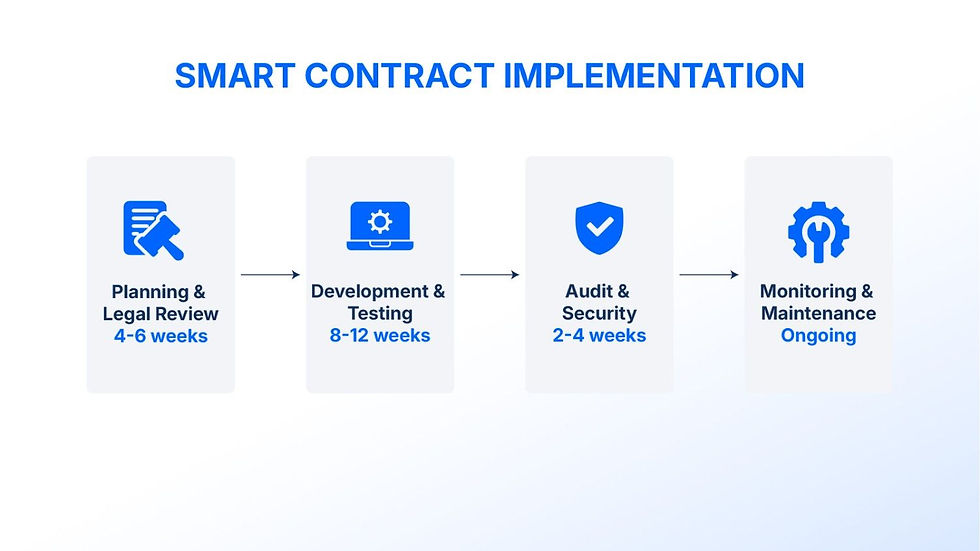
Identify which contract functions have the highest risk. Map these to immediate alert channels like Slack or PagerDuty. Low-risk events can go to a daily digest. This prevents alert fatigue and ensures critical issues are seen instantly.
Avoid static limits that trigger false positives. Use historical data to set thresholds based on percentage of supply or volume spikes. For example, alert on any single transfer exceeding 1% of circulating supply rather than a fixed token amount.
Connect your monitoring dashboard to your incident response playbook. When an alert fires, the team should have a clear checklist: verify the event, check for exploit signatures, and decide whether to pause the contract or investigate further.
Common pitfalls in contract monitoring
Even with robust infrastructure, monitoring strategies often fail due to preventable human errors. The most frequent mistake is over-monitoring. When you subscribe to every possible event or log, you create noise that drowns out actual threats. Instead of trying to watch everything, focus on high-value state changes and critical function calls. This reduces latency and makes it easier to spot anomalies when they occur.
Another major trap is ignoring false positives. No monitoring tool is perfect; they will flag benign activity that looks suspicious. If you treat every alert as a critical incident, your team will suffer from alert fatigue. Establish clear triage protocols to distinguish between genuine exploits and configuration quirks. This ensures your team reacts quickly to real threats without burning out on false alarms.
Finally, relying on a single data source creates blind spots. Block explorers, RPC nodes, and indexer services can all experience downtime or data gaps. If you depend solely on one provider, you might miss a critical transaction during an outage. Use redundant sources to cross-verify data. For example, confirm a large transfer on-chain using multiple endpoints before triggering an on-chain response or alert.
By avoiding these common traps, you build a monitoring system that is both responsive and reliable. Focus on quality over quantity in your subscriptions, and always have redundancy in your data sources.
Helpful gear
Use these product recommendations as a starting point, then choose the size, material, and price point that fit how you actually use the gear.



As an Amazon Associate, we may earn from qualifying purchases.
No comments yet. Be the first to share your thoughts!