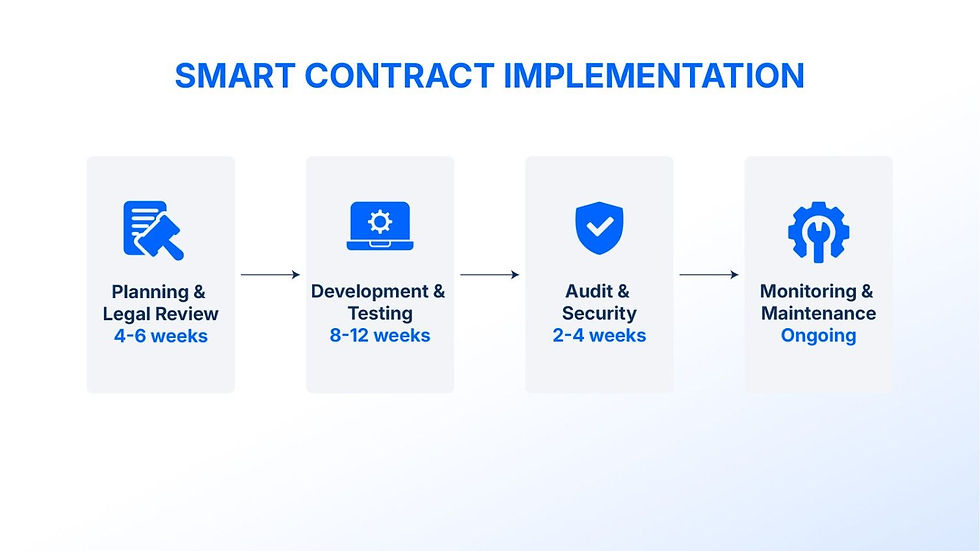
Smart Contract Monitoring Budget: Balancing Cost and Coverage
Monitoring smart contracts is not a one-size-fits-all expense. Your budget will depend on whether you are protecting a high-value DeFi protocol or testing a simple NFT minting contract. The tradeoff is usually between the breadth of your monitoring coverage and the depth of your alerting capabilities.
Free and Open-Source Tools
For low-stakes projects or early-stage development, free tools like Tenderly’s free tier or self-hosted OpenZeppelin Defender instances offer basic event logging and transaction simulation. These tools are excellent for catching obvious errors during deployment but lack the sophisticated anomaly detection needed for mainnet operations. You trade off automated threat detection for zero financial cost, which is acceptable if you have a strong internal audit process.
Paid Monitoring Platforms
As your TVL (Total Value Locked) grows, the cost of a breach far exceeds the monthly subscription of professional monitoring services. Platforms like Forta, Chainlink Automation, or dedicated enterprise solutions from firms like CertiK or SlowMist provide real-time transaction scanning, custom alerting, and historical data analysis. These services often charge based on the number of RPC calls or the complexity of your smart contracts. The benefit is rapid incident response; you can pause a contract or trigger a mitigation strategy within seconds of detecting malicious activity.
Choosing the Right Tier
When evaluating paid options, look beyond the headline price. Consider the cost of false positives—alerts that trigger but aren’t threats. High false-positive rates lead to alert fatigue, which can cause you to miss real attacks. Start with a mid-tier plan that covers your core contracts, then scale up as you add new protocols. Always ensure the tool integrates with your existing CI/CD pipeline to maintain security without slowing down development.


As an Amazon Associate, we may earn from qualifying purchases.
Shortlist real options
Choosing the right smart contract monitoring tool depends on whether you prioritize automated alerting, deep transaction auditing, or custom event tracking. The market has consolidated around a few robust platforms that handle the noise of on-chain activity so developers and security teams can focus on actual threats rather than parsing raw logs.
The following comparison highlights the strongest options available for 2026. These tools cover the full spectrum from pre-deployment security to post-deployment transaction monitoring. Selecting the right one requires matching their specific capabilities to your infrastructure's complexity and your team's operational workflow.
| Platform | Monitoring Type | Primary Focus | Key Integration | Best For |
|---|---|---|---|---|
| OpenZeppelin Defender | SaaS | Transaction & Event Monitoring | Hardhat/Truffle | Developers wanting automated security workflows |
| Hacken | Audit & Monitoring | Security Audits & Compliance | Multi-chain | Teams needing formal security verification |
| SCSF (Smart Contract Security Field Guide) | Framework | Best Practices & Log Analysis | Custom Scripts | Building custom monitoring infrastructure |
| Tenderly | Infrastructure | Real-time Transaction Simulation | Web3 SDKs | High-frequency trading and DeFi protocols |
OpenZeppelin Defender remains the standard for developers who want to monitor smart contract activity without building infrastructure from scratch. It allows you to set up monitors for specific events or transactions, triggering actions when conditions are met. This is particularly useful for automated recovery mechanisms or alerting security teams to suspicious activity.
For teams that need more than just alerts, platforms like Hacken provide a broader security context. They combine monitoring with formal audit trails, ensuring that your contract's logic holds up under scrutiny. This is essential for high-stakes deployments where a single vulnerability could result in significant financial loss.
Inspect the expensive parts
Smart contract failures rarely happen in isolation; they cascade through the most capital-intensive parts of your code. When you audit or monitor a contract, you are not looking for every bug—you are looking for the ones that drain the treasury. Treat your monitoring setup like a pressure gauge on a high-vessel pipe: you only need to watch the joints where the pressure is highest.
Focus your inspection checklist on the functions that move value, not the ones that just manage state. A failed logic check in a helper function is an annoyance; a failed check in a withdrawal function is a bankruptcy. Prioritize your infrastructure and manual reviews around these high-stakes interactions.
1. The Treasury Exit Paths
Every contract has a way to get money out. This is your single most expensive failure point. Inspect every function that calls transfer, send, or call with value. Ensure that these paths are protected by multi-sig requirements or time-locks. If a single key can drain the contract, your monitoring tools are irrelevant because the damage is already done.
2. Authorization Boundaries
Check who can call the expensive functions. Look for onlyOwner or onlyAdmin modifiers. In many exploits, the "owner" key is compromised, or the admin role is granted to a vulnerable proxy contract. Verify that the access control logic is rigid and that no unintended addresses can trigger high-value transactions. A loose permission model is a open door for attackers.
3. External Dependency Risks
Your contract does not exist in a vacuum. It interacts with oracles, other contracts, and external APIs. Inspect how your contract handles responses from these external sources. If an oracle price feed is manipulated, your lending protocol might liquidate users incorrectly. Ensure you have fallback mechanisms or circuit breakers that pause operations if external data looks suspicious.
4. Reentrancy and State Consistency
Even with modern Solidity versions, reentrancy is a risk if you are interacting with untrusted contracts. Inspect the order of operations in your functions. Always update internal state before making external calls. If an attacker can call back into your contract before your state is updated, they might withdraw funds multiple times from a single deposit.
5. Gas Limit and DoS Vectors
Expensive operations can lead to denial-of-service attacks. If a function loops through an array of users to send payments, a large array can cause the transaction to fail due to gas limits. Inspect all loops and ensure they are bounded or can be paused. A contract that cannot process payments because it ran out of gas is effectively broken.


As an Amazon Associate, we may earn from qualifying purchases.
Plan for ownership costs
The initial license fee for smart contract monitoring tools is often just the entry point. True ownership costs emerge during deployment, integration, and ongoing maintenance. A tool that appears inexpensive on paper can become expensive quickly if it requires significant developer time to configure or if it generates excessive data that strains your infrastructure.
Hidden integration and maintenance costs
Many monitoring platforms charge based on the number of contracts monitored, the volume of events processed, or the number of team members with access. These variable costs can scale unpredictably as your project grows. Additionally, consider the engineering hours needed to integrate the tool with your existing CI/CD pipelines and alerting systems. If a tool lacks robust APIs or requires custom scripting to fit your workflow, the labor cost often outweighs the software savings.
When cheap tools become expensive
Low-cost or free monitoring solutions often lack the sophistication needed for complex smart contract environments. They may miss critical edge cases, require manual log analysis, or fail to provide real-time alerts. This can lead to security vulnerabilities going undetected or false positives that distract your team. The cost of a single security incident or missed audit finding far exceeds the price difference between a basic and a professional monitoring tool.
Evaluating total cost of ownership
When comparing tools, look beyond the monthly subscription. Evaluate the cost of setup, the efficiency of the user interface, and the quality of support. A slightly more expensive tool with better automation and clearer dashboards can reduce operational overhead and improve response times. Prioritize tools that offer transparent pricing and scalable features that grow with your needs, ensuring long-term value rather than short-term savings.


As an Amazon Associate, we may earn from qualifying purchases.
Smart Contract Monitoring FAQs
What specific on-chain data do monitoring tools track?
Effective monitoring relies on parsing contract events and transaction logs rather than just watching balances. Tools like OpenZeppelin Defender allow developers to set customized templates that trigger alerts based on specific event signatures or state changes. By optimizing data redundancy and understanding these event signatures, you can detect anomalies before they escalate into exploits.
How does monitoring differ from static code analysis?
Static analysis checks code for vulnerabilities before deployment, but monitoring happens after the contract goes live. As noted in the Smart Contract Security Field Guide, post-deployment operations require continuous observation. Since deployed code cannot be modified, runtime verification monitors act as a defensive layer, ensuring that the contract behaves as intended during actual execution.
Can I monitor smart contracts across multiple blockchains?
Yes, most modern infrastructure supports multi-chain monitoring. You can configure a single dashboard to watch for activity across Ethereum, Polygon, or other EVM-compatible networks. This centralization is critical for teams managing portfolios or protocols that operate on several chains simultaneously, ensuring no suspicious activity slips through the cracks due to fragmented oversight.
Is smart contract monitoring necessary for small projects?
Even small projects face risks from automated bots or accidental user errors. Continuous monitoring helps detect unexpected interactions, such as failed transactions or unusual gas usage patterns. For any project holding user funds, the cost of a monitoring tool is negligible compared to the potential loss from an undetected exploit or governance attack.
No comments yet. Be the first to share your thoughts!