Why monitoring matters now
Passive audits are no longer enough to keep DeFi protocols safe. A smart contract audit is a snapshot in time, capturing the state of your code on a specific date. It does not account for changes in the broader ecosystem, new vulnerabilities discovered in dependencies, or the complex interactions that happen after deployment. Once your contract is live, the attack surface expands rapidly.
Active monitoring bridges the gap between static security checks and real-world execution. Tools like Tenderly provide real-time blockchain monitoring and alerting, allowing teams to catch incidents before users do. These systems track events, balances, and invariants across every transaction, flagging contract drift or unusual behavior as it happens. Without this infrastructure, you are flying blind until a transaction fails or funds are drained.
The stakes have only risen. As DeFi protocols manage larger totals and interact with more complex layers, the window for response shrinks. Relying solely on pre-deployment audits is like locking your front door but leaving the windows open. You need continuous visibility to detect anomalies, enforce safety limits, and maintain user trust in a high-stakes environment.
To understand the market context driving these security needs, consider the volatility and volume of major DeFi assets.
Static analysis scanners
Static analysis tools scan smart contract code before deployment to catch vulnerabilities early. They treat the code like a blueprint, checking for structural flaws without running the contract. This approach is fast and cost-effective, making it a standard part of the smart contract monitoring workflow.
Slither and Mythril are the most prominent tools in this category. Slither, developed by Trail of Bits, focuses on speed and finding common Solidity bugs like reentrancy or integer overflows. Mythril uses symbolic execution to explore different code paths, uncovering logic errors that simple pattern matching might miss.
| Feature | Slither | Mythril | Securify |
|---|---|---|---|
| Primary Method | Pattern matching | Symbolic execution | Formal verification |
| Speed | Very fast | Moderate | Moderate |
| Best For | Quick audits, CI/CD | Deep logic bugs | Critical security guarantees |
| Language | Solidity | Solidity, Vyper | Solidity |
These tools work best when combined. Slither gives you a quick health check, while Mythril digs deeper into complex logic. Securify offers a different perspective by verifying specific security properties formally. Using all three creates a layered defense, ensuring that smart contract monitoring is thorough and reliable.

Dynamic testing and fuzzing
Static analysis scans code without running it, but dynamic testing and fuzzing tools like Echidna and Manticore actually execute the smart contract to find edge-case failures. Think of static analysis as proofreading a manual, while dynamic testing is handing the manual to a user and watching them break the device. This distinction is critical for smart contract monitoring tools because it reveals how your code behaves under real-world, adversarial conditions rather than just in theory.
Fuzzing tools generate thousands of random inputs to stress-test your functions. If a transaction reverts unexpectedly or a state variable becomes corrupted, the fuzzer captures the exact sequence of calls that caused the issue. Echidna, for example, is widely regarded as the industry standard for Ethereum smart contract fuzzing. It automatically generates test cases that explore deep execution paths, often uncovering vulnerabilities that manual review or static scanners miss entirely.
Manticore takes a different approach with symbolic execution. Instead of random inputs, it explores all possible paths through the code mathematically, ensuring complete coverage of logical branches. This method is particularly effective for finding complex logic errors and reentrancy vulnerabilities that depend on specific state conditions. Together, these tools provide a robust layer of security, ensuring your smart contract monitoring strategy covers both the code structure and its runtime behavior.
Real-time blockchain monitors
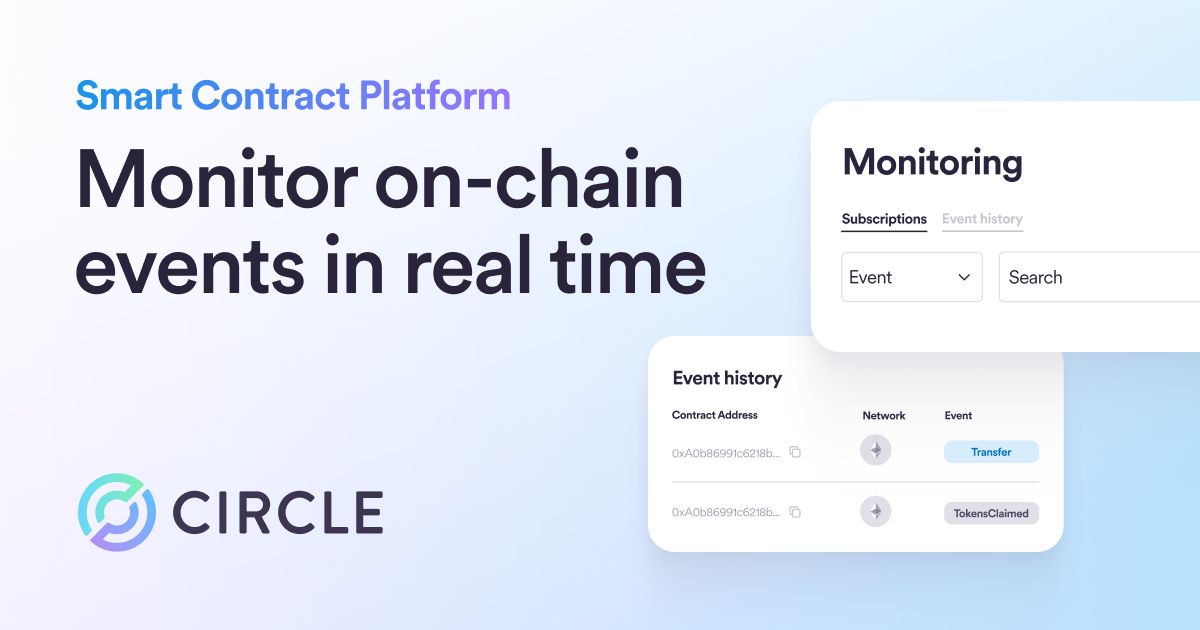
Smart Contract Monitoring tools like Tenderly shift the focus from pre-deployment scanning to post-deployment vigilance. Once a contract is live, static analysis is no longer enough. You need to watch the chain as it happens, catching incidents before they cascade into user-facing failures.
These infrastructure platforms provide real-time alerts on events, balance changes, and invariant violations. Instead of waiting for a transaction to confirm and fail, you can set up automated triggers that notify your team the moment a contract drifts from its expected behavior. This proactive stance is critical for high-stakes deployments where downtime or exploited logic can mean significant financial loss.
The difference between a scanner and a monitor is timing. Scanners look at code; monitors look at state. By tracking live contract drift and unexpected state changes, these tools act as a safety net for deployed logic, ensuring that even subtle bugs or external shocks are caught immediately.
Building a monitoring stack
No single Smart Contract Monitoring tool catches every vulnerability. Effective security requires combining static analysis, dynamic testing, and real-time event tracking into a cohesive workflow.
Think of your monitoring stack as a layered defense. Static analysis checks the blueprint before deployment. Dynamic testing simulates attacks during development. Real-time monitoring watches for exploits after the code goes live.
1. Static analysis for early detection
Start with tools like Slither or Mythril to scan your code for known patterns and vulnerabilities. These tools are fast and can be integrated directly into your CI/CD pipeline. They catch common issues like reentrancy or integer overflows before you even deploy to a testnet.
2. Dynamic testing and fuzzing
Next, use dynamic tools like Echidna or Foundry fuzzing to test your contracts under various conditions. These tools generate random inputs to find edge cases that static analysis might miss. This step is crucial for ensuring your logic holds up under unexpected scenarios.
3. Real-time event monitoring
Once deployed, use real-time monitoring tools to watch for suspicious activity. Services like Forta or Tenderly alert you to unusual transaction patterns or potential exploits as they happen. This layer provides the final safety net, allowing you to react quickly to threats.
4. Integration and alerting
Finally, connect these tools into a unified dashboard. Configure alerts to notify your team via Slack or email when critical issues are detected. This ensures that no alert goes unnoticed and that your team can respond immediately to potential security incidents.
Common questions about smart contract monitoring tools
What are the best smart contract audit tools?
The most effective smart contract audit tools combine static analysis, formal verification, and dynamic testing to ensure code security. Leading options in 2025 and 2026 include Mythril, Slither, Securify, MythX, and ContractFuzzer. These platforms help developers identify vulnerabilities before deployment, reducing the risk of exploits.
Can ChatGPT audit smart contracts?
Research indicates that GPT-4 lacks the ability to detect smart contract vulnerabilities effectively on its own. While it shows potential in parsing code and writing proof-of-concept scripts, it should only be used as an auxiliary tool to enhance the efficiency of professional security audits, not as a primary detection mechanism.
Which tool is commonly used for smart contract development?
OpenZeppelin is one of the most recognized names in smart contract development and security. It offers a well-maintained library of modular, reusable, and secure smart contracts for Ethereum and other EVM-compatible chains. Developers rely on these standard contracts to build foundational security into their projects from the ground up.
Helpful gear
Use these product recommendations as a starting point, then choose the size, material, and price point that fit how you actually use the gear.


As an Amazon Associate, we may earn from qualifying purchases.
No comments yet. Be the first to share your thoughts!