Smart contract monitoring limits to account for
Smart contract monitoring requires a layered approach to catch anomalies before they result in financial loss. Effective monitoring combines event listening, oracle deviation tracking, and gas analysis to create a comprehensive security posture.
Smart contract monitoring choices that change the plan
When selecting monitoring tools, prioritize capabilities that address specific attack vectors over generic dashboards. A robust strategy distinguishes between passive observation and active threat detection.
| Factor | What to check | Why it matters |
|---|---|---|
| Data Latency | Verify if the tool polls the mempool or waits for block finality. | |
| Coverage Scope | Ensure the tool monitors both standard ERC-20 events and custom governance actions. | |
| Alert Accuracy | Check for configurable thresholds and false-positive reduction features. |
Build a monitoring stack that catches issues before they cost you
Smart contract monitoring is not a single tool but a layered infrastructure. You need visibility into on-chain events, real-time price feeds, and transaction traces to spot anomalies early. Relying on a single provider leaves blind spots that attackers exploit. A robust stack combines event listeners, oracle monitoring, and gas analytics.
1. Set up event log listeners for critical state changes
The first layer of defense is listening to emitted events. Smart contracts emit logs when state changes, such as token transfers or ownership updates. Use tools like Alchemy or Infura to subscribe to these events. Focus on high-value events: Transfer, Approval, and custom governance actions. Filter by address and topic to reduce noise. This gives you a real-time feed of contract activity.
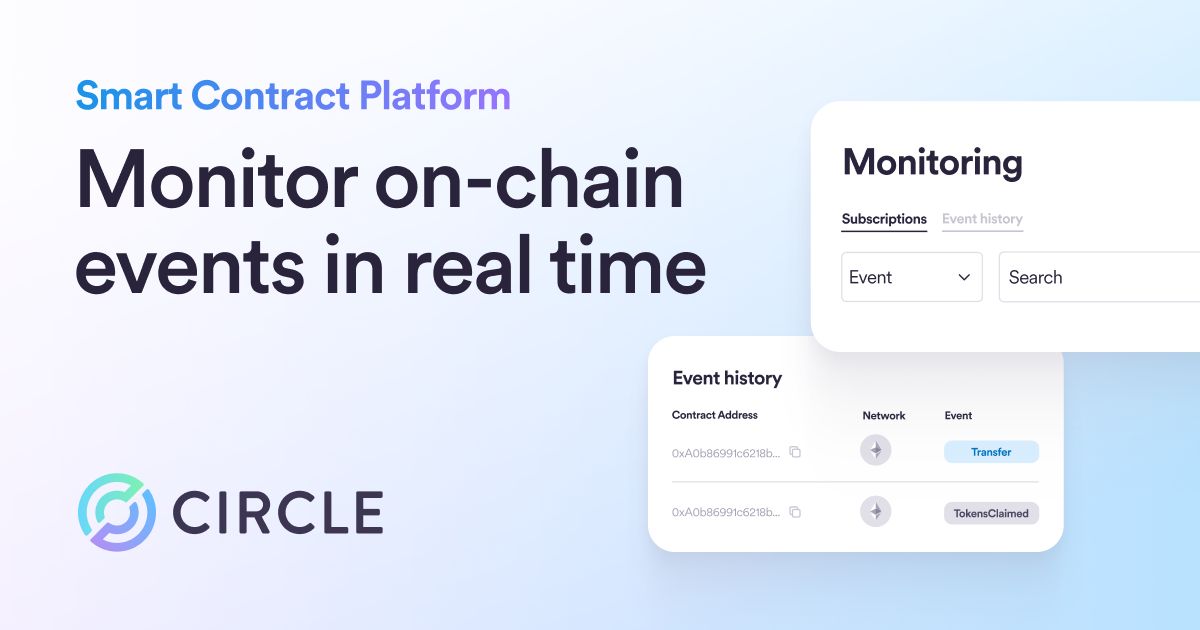
Start by identifying the contract addresses you need to watch. Use the ABI to decode event signatures. Set up webhooks or WebSocket connections to receive logs immediately. Prioritize events that affect token balances or admin privileges. Ignore low-value events to save compute resources.
2. Monitor oracle price feeds for manipulation
DeFi protocols rely on oracles for price data. If an oracle is manipulated, your protocol’s collateral value can drop unexpectedly. Monitor the deviation between your oracle’s price and the market price on major exchanges. Set thresholds for acceptable deviation. If the price moves too far, trigger an alert or pause trading. This prevents liquidations based on stale or manipulated data.
Compare your protocol’s oracle price against Chainlink or Uniswap V3 TWAP. Use a script to calculate the percentage difference. If the difference exceeds 5%, send an alert to your team. Log the event for post-mortem analysis. This step is critical for protocols with low liquidity.
3. Analyze gas patterns for suspicious activity
Attackers often use high gas prices to front-run transactions or bypass rate limits. Monitor gas usage patterns across your monitored contracts. Sudden spikes in gas consumption can indicate a reentrancy attack or a complex exploit. Set up alerts for abnormal gas spikes. Correlate these spikes with transaction hashes to identify the malicious actor.
Track the average gas price for your contract’s transactions. Flag any transaction that uses more than 2x the average gas. Investigate these transactions immediately. Check if they are interacting with multiple contracts in a single block. This pattern often signals a sophisticated attack.
4. Integrate a centralized alerting dashboard
Individual monitors are not enough. You need a single dashboard to view all alerts. Use tools like Grafana or custom dashboards to aggregate data from your event listeners, oracle monitors, and gas analyzers. Create custom views for different teams: developers, security, and operations. This ensures everyone sees the same data and can respond quickly.
Connect your monitoring tools to a central dashboard. Use webhooks to push alerts to Slack or Discord. Create rules for severity levels: critical, warning, and info. Critical alerts should trigger immediate page-outs. This reduces response time and prevents small issues from becoming major breaches.
5. Test your monitoring with simulated attacks
A monitoring stack is only as good as its ability to detect real threats. Regularly test your system with simulated attacks. Use tools like Echidna or Manticore to generate fuzzing tests. Inject these tests into your monitoring pipeline. Verify that your alerts trigger correctly. This ensures your stack is ready when a real attack occurs.
Schedule weekly fuzzing tests on your critical contracts. Review the results with your security team. Update your monitoring rules based on new attack vectors. This proactive approach keeps your stack ahead of emerging threats.


As an Amazon Associate, we may earn from qualifying purchases.
Watchouts: Misleading Claims and Weak Options
Smart contract monitoring promises real-time security, but several common traps can leave your DeFi infrastructure vulnerable. The gap between what tools claim and what they actually deliver often leads to false confidence during critical moments.
The "Real-Time" Myth
Many dashboards label their data as "real-time," yet there is often a 15-30 second delay between an on-chain event and its appearance in the UI. This lag is negligible for casual observation but dangerous for arbitrage or high-frequency defense. Always verify the data source is polling the mempool or using a direct node connection, not just indexing finalized blocks.
Weak Option: Basic Log Parsers
Simple log parsers that only look for specific event signatures are insufficient. They miss complex multi-step exploits that don't trigger a single obvious event. Relying on these creates a blind spot. You need tools that analyze state changes and transaction flows, not just emitted logs.
Common Mistake: Ignoring Gas Anomalies
Monitoring only for failed transactions is a critical oversight. Attackers often use high-gas transactions to test exploit paths or drain liquidity in subtle ways. A robust monitoring strategy must flag gas usage spikes as potential reconnaissance activity, not just errors. Without this, you are only reacting to obvious failures, not preventing sophisticated attacks.
Smart contract monitoring: practical: what to check next
Choosing a monitoring strategy involves balancing real-time visibility with operational overhead. These answers address the most common tradeoffs teams face when building or selecting a smart contract monitoring infrastructure.
No comments yet. Be the first to share your thoughts!