Why smart contract monitoring matters now
Smart contracts are immutable by design. Once the code is deployed to the blockchain, it cannot be changed. This permanence is a double-edged sword: it guarantees trustlessness, but it also means that a single bug can lead to irreversible financial loss. As noted in academic research on runtime verification, the inability to patch deployed code makes continuous monitoring the only viable defense against exploits (Capretto, 2024).
The stakes are significantly higher today than in previous market cycles. With billions of dollars locked in decentralized finance (DeFi) protocols, the attack surface has expanded dramatically. A vulnerability that might have cost a few thousand dollars in 2017 can now drain millions in seconds. This reality shifts the focus from pre-deployment audits alone to active, post-deployment surveillance. Audits provide a snapshot of security at a specific moment, but they do not guarantee safety against novel attack vectors or evolving market conditions.
Post-deployment monitoring acts as an early warning system. It allows teams and users to detect anomalous transactions, unusual gas usage, or potential reentrancy attacks in real-time. Without this layer of visibility, responses to incidents are reactive rather than proactive, often resulting in total fund losses. In a high-stakes environment where trust is binary—either the code works as intended, or it fails catastrophically—monitoring is not just a best practice; it is a critical risk mitigation tool.
The Technical Stack for Monitoring
Effective smart contract monitoring relies on a layered infrastructure. You need to capture raw data, interpret it, and store it for analysis. A gap in any layer creates blind spots that attackers can exploit.
Node Providers and RPC Endpoints
Node providers are your entry point to the blockchain. They serve as the gatekeepers, delivering the raw data your monitoring tools need. For high-stakes applications, relying on a single public node is risky. Network latency or downtime can cause you to miss critical transactions.
Enterprise-grade providers like Alchemy, Infura, or QuickNode offer redundant endpoints and higher rate limits. They ensure your listeners stay connected even during network congestion. Always configure fallback providers to maintain uptime.
Event Listeners
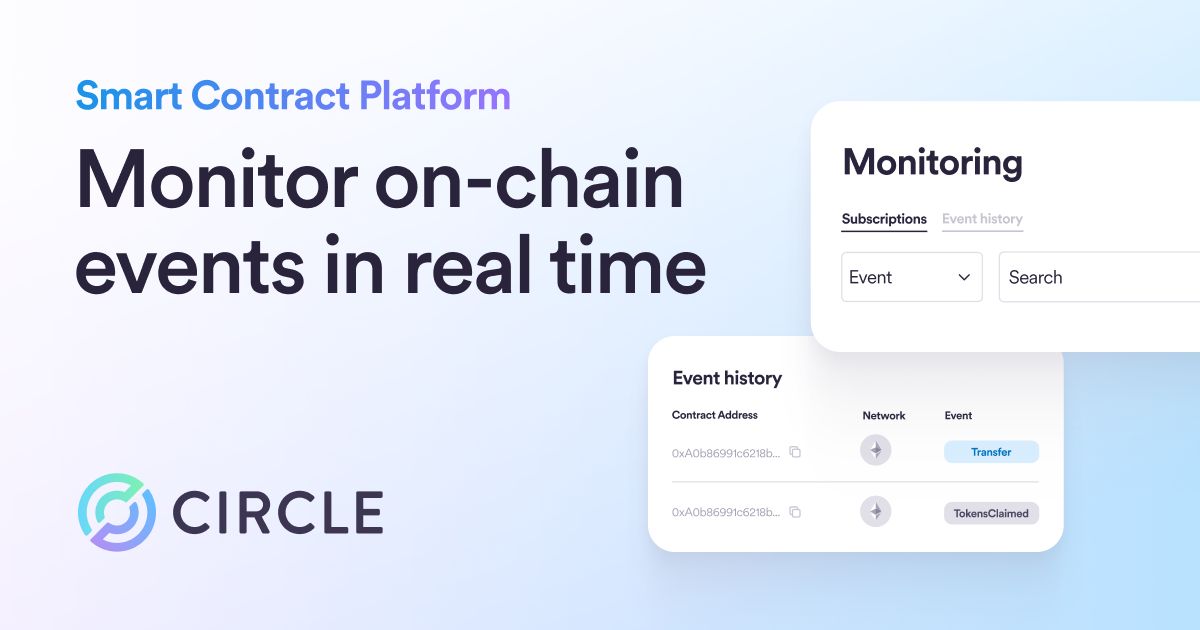
Smart contracts emit events to communicate state changes. These events are cheaper than storing data on-chain and are the primary signal for monitoring bots. Your listener must subscribe to specific event signatures to filter noise.
Optimize your listener logic to handle reorgs and log reorganizations. If your application relies on real-time responses, you need low-latency access to these logs. Tools like The Graph or custom indexers help structure this data for faster querying.
Data Indexing
Raw blockchain data is unstructured and difficult to query. Indexing transforms this data into a format that your analysis tools can use. Without an indexer, you are scanning the entire blockchain history for every query, which is slow and inefficient.
Indexers like The Graph or custom subgraphs create a local database of contract events. This allows you to run complex queries against historical data. For security audits, having a complete historical record is essential to trace fund flows and detect anomalies.
Essential monitoring tools
Smart contract monitoring isn't a single switch you flip; it's a stack of specialized instruments. Relying on one vendor to catch everything from reentrancy attacks to oracle manipulation leaves blind spots that hackers exploit. The most resilient infrastructure combines automated scanners, on-chain analytics, and manual audit trails. Below is a breakdown of the primary tool categories, their specific roles, and where they fit in your security workflow.
Automated Vulnerability Scanners
Static analysis tools are the first line of defense. They scan source code against known vulnerability patterns before deployment. While they catch common issues like integer overflows or unchecked external calls, they struggle with complex business logic. Use them for early-stage checks, but never as your sole verification method.
On-Chain Analytics Platforms
Once a contract is live, you need visibility into transactions and state changes. Analytics platforms track wallet interactions, token flows, and gas usage in real time. These tools help you detect unusual activity, such as a sudden drain of liquidity or a contract interacting with a known malicious address. They are essential for post-deployment monitoring.
Manual Audit Firms
Automated tools miss context. Manual audits involve expert developers reviewing code line-by-line to identify logical flaws and economic exploits. This is the gold standard for high-value contracts. As noted by ISACA, manual auditing consists of an expert team performing complete code analysis to identify problems that scanners miss. It is slow and expensive, but critical for protecting significant capital.
Open-Source Security Frameworks
Projects like ConsenSys Diligence provide best-practice guides and open-source libraries. These frameworks standardize security checks and offer reusable code snippets that prevent common pitfalls. Integrating these into your development pipeline ensures consistency across projects without reinventing the wheel.
| Tool Category | Primary Use Case | Detection Capability | Cost Model |
|---|---|---|---|
| Static Analysis | Pre-deployment code scan | Syntax errors, known CVEs | Low / Free |
| On-Chain Analytics | Live transaction monitoring | Anomalous behavior, exploits | Subscription |
| Manual Audit | Deep logic verification | Business logic, economic exploits | High |
| Open-Source Frameworks | Standardized security checks | Best practice compliance | Free |
Analyze Data to Spot Anomalies
Monitoring tools only generate value if you know what to look for. Raw logs are noise until you apply context. The goal is to distinguish between normal market volatility and malicious activity. This section breaks down the specific signals that indicate a potential exploit or performance degradation.
Look for spikes in transaction volume that deviate from historical baselines. A sudden surge in calls to a specific function, especially during low-activity periods, often signals a bot running an exploit or a front-running attack. Compare current gas usage against the contract’s average. If a simple view function suddenly consumes 500,000 gas, something is wrong.
Monitor storage writes for unauthorized modifications. Smart contracts should only update state when specific conditions are met. If you see a balance update without a corresponding transfer event, or a role change triggered by an unprivileged address, treat it as a critical alert. Ethereum.org emphasizes that state integrity is the core of contract security; any deviation is a potential breach.

Watch for functions that call external contracts recursively. Reentrancy attacks exploit the gap between state updates and external calls. If your monitor detects a function calling itself or another contract that loops back before the initial state is finalized, halt the flow immediately. Similarly, infinite loops in execution will cause gas limits to be exceeded repeatedly, creating a distinct pattern in the mempool.
A gradual increase in gas costs for standard operations can indicate bloat or inefficient code execution. While not always an exploit, it degrades user experience and increases vulnerability to denial-of-service attacks. Use a TechnicalChart to visualize gas trends over time. If the median gas cost for a swap operation rises steadily without a corresponding increase in network congestion, your contract may be degrading.
The chart above visualizes standard market behavior. Use this as a baseline. When your contract’s internal metrics diverge sharply from this normal market rhythm, investigate immediately. Anomalies are rarely obvious in isolation; they become clear when you compare them against established norms.
Common monitoring pitfalls
Setting up smart contract monitoring is often treated as an afterthought, but it is the difference between catching a reentrancy attack in progress and discovering a drained treasury the next morning. The most common failure mode is not technical complexity, but operational noise. Teams frequently configure alerts that trigger on every minor state change, creating a "cry wolf" environment where critical signals are drowned out by routine transaction logs.
Ignoring false positives is a fatal error. When an alerting system fires on expected behavior—such as a standard token transfer or a routine governance proposal—engineers begin to mute or ignore the dashboard. This desensitization means that when a genuine anomaly occurs, such as an unexpected approval limit increase or a sudden spike in gas usage indicative of a denial-of-service attempt, it is overlooked. Monitoring must distinguish between noise (expected chain activity) and signal (deviations from known contract logic).
Another frequent mistake is over-indexing on data quantity while under-indexing on context. Collecting every single event emitted by a contract generates massive volumes of raw data, but without proper indexing and aggregation, this data is unusable for real-time decision-making. Instead of trying to monitor every byte of on-chain history, focus on high-value state changes: ownership transfers, parameter updates, and liquidity movements. Use tools that allow you to filter for specific event signatures and parameter values relevant to your contract's security model.
Finally, many teams fail to test their alerting infrastructure itself. A monitoring system that has not been stress-tested with simulated attack scenarios is a false sense of security. Regularly run your alerts against known exploit patterns or synthetic transactions to ensure they trigger correctly and that the response workflow is clear. If you cannot prove your alerts work when nothing is wrong, you cannot trust them when something is.
Helpful gear
Use these product recommendations as a starting point, then choose the size, material, and price point that fit how you actually use the gear.


As an Amazon Associate, we may earn from qualifying purchases.
No comments yet. Be the first to share your thoughts!