Budget fit for smart contract monitoring
Building a monitoring stack requires balancing upfront costs against the speed of incident response. You generally face three tiers of infrastructure, each with distinct trade-offs in price, age, and condition.
Entry-level (Free to $50/mo)
This tier relies on public RPC endpoints and open-source tools like Tenderly’s free sandbox. It is suitable for testing or low-volume mainnet forks. The condition is fragile; you have no SLA, and public endpoints often throttle or drop events during network congestion. It is the cheapest option but offers the least visibility.
Mid-tier ($100–$500/mo)
This is the standard for most active protocols. You pay for dedicated node access (e.g., Alchemy, Infura) and commercial indexing services like The Graph or Covalent. The age of the data is near-real-time, and the condition is reliable with proper indexing. You trade higher monthly costs for automated alerting and historical log analysis, which is critical for detecting re-entrancy or oracle manipulation.
Enterprise (Custom pricing)
For high-value protocols, you deploy private validators or use institutional-grade services like Chainstack Enterprise. This tier offers redundant infrastructure, custom log shipping, and direct support. The condition is robust, and the age is minimal. The price is high, but it is justified by the need for 99.99% uptime and forensic-grade data retention for incident response.


As an Amazon Associate, we may earn from qualifying purchases.
When selecting a tier, prioritize the condition of the data over the age. Old data is useless if it is incomplete. A mid-tier solution with reliable indexing is often a better investment than an enterprise setup with poor log coverage. Always verify that your chosen provider supports the specific event signatures your contracts emit.
Shortlist real options
Real-time risk analysis for smart contracts relies on comparing distinct monitoring strategies rather than relying on a single tool. Each approach offers different tradeoffs between latency, data depth, and implementation complexity.
The following table compares four primary monitoring methods used in production environments. This comparison helps you select the right infrastructure for your specific risk profile and technical stack.
| Strategy | Latency | Data Depth | Setup Complexity |
|---|---|---|---|
| Event-Based Monitoring | Low | High | Medium |
| Transaction Replay | High | Very High | High |
| Static Analysis | N/A (Pre-deploy) | Medium | Low |
| Node RPC Polling | Medium | Low | Low |
Event-based monitoring tracks emitted logs from deployed contracts. This method provides low-latency alerts for critical state changes, such as large transfers or ownership updates. It requires indexing logs, which adds moderate infrastructure complexity but offers high data fidelity for active threats.
Transaction replay involves re-executing past blocks against a test environment. This offers the deepest visibility into internal state changes and gas usage, making it ideal for forensic analysis. However, the high computational cost makes it unsuitable for real-time alerting.
Static analysis runs before deployment, checking code against known vulnerability patterns. While it cannot catch runtime exploits, it is the most effective way to prevent initial breaches. It is a foundational layer that should complement, not replace, runtime monitoring.
Node RPC polling checks contract state at regular intervals. This is the simplest strategy to implement but suffers from higher latency and lower data granularity. It is best suited for low-frequency checks or as a fallback when other methods fail.
Choosing the right strategy often involves combining these methods. For example, using static analysis for pre-deployment safety and event-based monitoring for real-time alerts creates a robust defense-in-depth architecture. Consider your specific threat model when weighing these options.

As an Amazon Associate, we may earn from qualifying purchases.
Inspect the expensive failure points
Most smart contract breaches stem from a handful of predictable, high-cost errors. Rather than scanning every line of code, focus your real-time monitoring strategy on the sections that, if they fail, drain funds or lock assets permanently. Treat your monitoring setup like a pressure gauge: you only need to watch the valves that control the flow.
Start by verifying event emission logic. As noted by SCSFG, optimizing data redundancy and understanding event signatures ensures that external tools can accurately track state changes. If an event is missing or malformed, your monitoring dashboard goes blind, leaving you unaware of a potential exploit until it is too late.
Next, audit your transaction monitoring capabilities. Defensive monitors should enforce properties that must hold true during execution, as described in transaction monitoring research. Implement checks for reentrancy, unauthorized access, and arithmetic overflows at the entry points of your critical functions. These are the expensive parts; everything else is just noise.
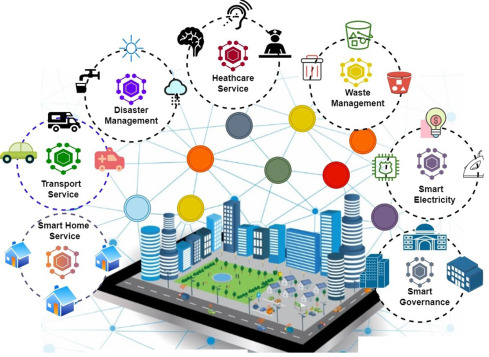
Step 1: Verify Event Emission
Ensure all critical state changes emit events with consistent signatures. Use log analysis tools to confirm that your monitoring service receives these signals in real time. If an event is missing, your dashboard cannot trigger alerts, leaving you vulnerable to silent failures.
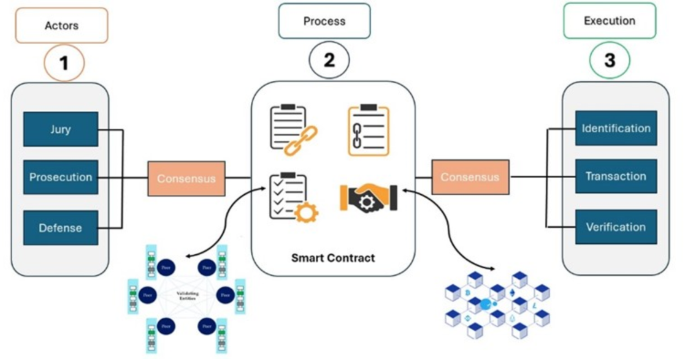
Step 2: Audit Transaction Monitoring
Implement defensive monitors that enforce strict properties during execution. Check for reentrancy, unauthorized access, and arithmetic overflows at the entry points of critical functions. These are the high-cost failure points that require immediate attention.
Step 3: Test Failure Scenarios
Simulate failure conditions to ensure your monitoring system triggers alerts correctly. Use tools like Tenderly or Hardhat to simulate exploits and verify that your alerts fire within seconds. This proactive testing ensures that your monitoring infrastructure is as robust as your code.
Ensure all critical state changes emit events with consistent signatures. Use log analysis tools to confirm that your monitoring service receives these signals in real time. If an event is missing, your dashboard cannot trigger alerts, leaving you vulnerable to silent failures.
Implement defensive monitors that enforce strict properties during execution. Check for reentrancy, unauthorized access, and arithmetic overflows at the entry points of critical functions. These are the high-cost failure points that require immediate attention.
Simulate failure conditions to ensure your monitoring system triggers alerts correctly. Use tools like Tenderly or Hardhat to simulate exploits and verify that your alerts fire within seconds. This proactive testing ensures that your monitoring infrastructure is as robust as your code.


As an Amazon Associate, we may earn from qualifying purchases.
Plan for ownership costs
A smart contract monitoring tool is rarely a set-it-and-forget-it purchase. The initial license fee is often just the entry ticket; the real expense comes from integration, maintenance, and alert fatigue. If your monitoring setup isn't aligned with your actual threat model, you'll spend more time investigating false positives than preventing exploits.
The hidden costs of monitoring
Integration complexity is the first silent budget killer. Most tools require custom connectors to your node provider, blockchain explorer, or internal logging infrastructure. A cheap SaaS tool might charge $500/month, but if it takes 40 engineering hours to integrate and maintain, the hourly cost quickly surpasses a premium, out-of-the-box solution. Always calculate the total cost of ownership (TCO) over a 12-month period, including engineering time.
Alert fatigue directly impacts operational costs. If a tool generates 1,000 alerts a day and 990 are noise, your security team is burning out. This leads to missed real threats or the need to hire additional analysts to triage alerts. Choose tools with high-fidelity alerting or customizable thresholds to keep signal-to-noise ratios manageable.
Maintenance and updates are ongoing. Blockchain protocols evolve; new vulnerability patterns emerge. Tools that require frequent manual rule updates or lack automated signature updates will consume more resources. Prioritize tools with active development teams and community-driven vulnerability databases to reduce your maintenance burden.
When cheap stops being cheap
A low-cost tool becomes expensive when it fails to scale with your contract complexity or when it lacks critical features like real-time transaction simulation or historical log analysis. For example, a basic log parser might miss subtle reentrancy patterns that a specialized monitor catches. The cost of a single undetected exploit far outweighs the premium for a robust monitoring solution.


As an Amazon Associate, we may earn from qualifying purchases.
Smart contract monitoring strategy: what to check next
What is the difference between event monitoring and transaction monitoring?
Event monitoring tracks specific state changes and logs emitted by a smart contract, such as token transfers or ownership updates. Transaction monitoring looks at the broader execution context, including gas usage and call stacks. Using both provides a complete picture: events tell you what happened, while transaction data explains how it happened.
How do I monitor smart contracts in real time without high latency?
Real-time monitoring requires subscribing to blockchain node events rather than polling block by block. Services like Circle’s Event Monitoring or SCSSG developers’ tools use WebSocket connections to push updates instantly. This reduces latency significantly compared to traditional API polling, which can miss fast-moving exploits.
Can smart contract monitoring prevent hacks entirely?
Monitoring is a defensive mechanism, not a shield. It detects anomalies or violations of predefined properties during execution, allowing for rapid response or transaction halting. While it cannot stop a flaw in the initial code design, it limits the damage window, giving teams time to react before funds are fully drained.
What tools are best for tracking complex DeFi interactions?
For complex DeFi interactions, you need tools that can decode multi-step transactions across different protocols. Look for platforms that support log analysis and data redundancy optimization. These features help you trace the flow of assets through multiple contracts, ensuring you don’t lose sight of the original source of a transaction.
No comments yet. Be the first to share your thoughts!