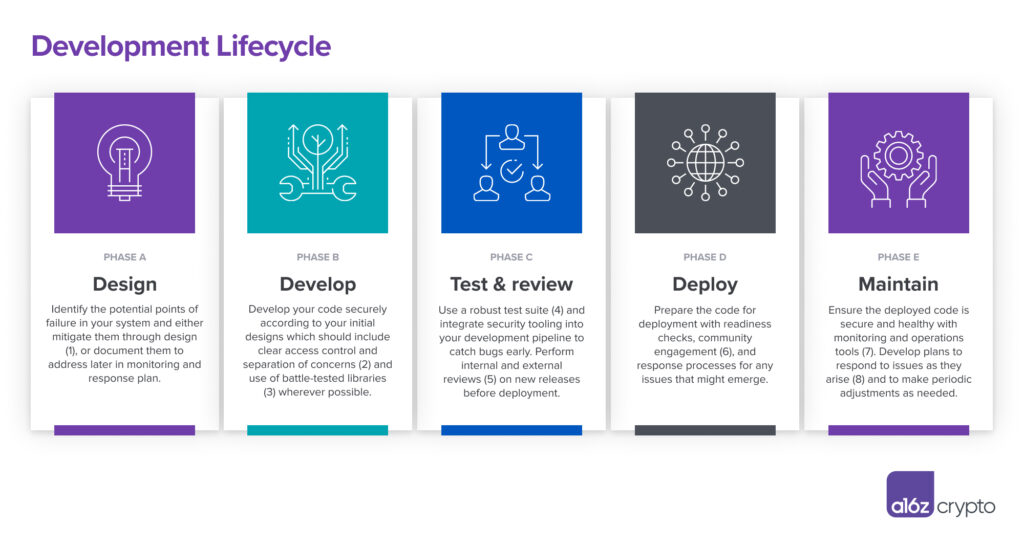
Smart contract monitoring strategy limits to account for
A smart contract monitoring strategy must balance real-time visibility with on-chain data limitations. Unlike traditional software logging, blockchain data is immutable and public, meaning your monitoring layer is the only dynamic component in an otherwise static system. The core constraint is that you cannot monitor what you do not emit.
Effective monitoring relies on event logs rather than internal state queries. As noted in the Smart Contract Security Field Guide, optimizing data redundancy in event signatures ensures that off-chain indexers can reliably track critical state changes without overloading node RPCs [src-serp-1]. This approach shifts the burden from expensive on-chain reads to efficient off-chain indexing.
However, event monitoring has blind spots. It captures what happened, but not always why. For complex logic, such as the four-step lifecycle of creation, freezing, execution, and finalization, event logs alone may lack the contextual depth needed for immediate incident response [src-serp-2]. You must pair event streams with periodic state snapshots to verify consistency.
The tradeoff is between latency and cost. Real-time WebSocket connections provide instant alerts but strain infrastructure. Batch processing reduces costs but introduces delays during high-traffic periods. Your strategy should prioritize high-value assets, such as treasury contracts or governance modules, for real-time monitoring, while accepting slight delays for lower-risk operations.
Evaluating smart contract monitoring choices that change the plan
Building a monitoring strategy requires balancing detection speed, data granularity, and operational cost. No single tool covers the entire lifecycle of a smart contract, from deployment to finalization. You must choose between real-time event tracking, transaction-level auditing, and post-deployment log analysis. The right mix depends on your risk tolerance and the complexity of your contract architecture.
Real-Time Event Monitoring vs. Historical Log Analysis
Real-time monitoring tracks on-chain events—such as state changes and transactions—as they happen. This approach allows for immediate intervention if a monitored property fails. However, it requires significant infrastructure to process high-volume data streams without missing critical signals. Historical log analysis is cheaper and easier to scale but offers no protection against active exploits. It serves primarily as a forensic tool rather than a defensive one.
Transaction-Level Auditing vs. Contract State Observation
Transaction-level auditing inspects the execution path of every call. If a specific vulnerability is triggered, the transaction can be aborted before it commits to the chain. This method provides the highest level of security but introduces latency and complexity. Contract state observation, by contrast, monitors the final state of variables. It is less invasive and easier to implement but may miss the specific code paths that led to a compromise.
Operational Cost vs. Detection Granularity
High-granularity monitoring requires processing every event and state change, which increases infrastructure costs. Many teams opt for a hybrid approach, monitoring high-value contracts in real-time while using cheaper, batched analysis for lower-risk contracts. This tradeoff ensures that resources are allocated to where they matter most. Over-monitoring can lead to alert fatigue, while under-monitoring leaves gaps in your security posture.
| Factor | Real-Time | Historical | Tx-Level | State-Only |
|---|---|---|---|---|
| Detection Speed | Immediate | Delayed | Near-Real-Time | Delayed |
| Infrastructure Cost | High | Low | Medium | Low |
| Risk Mitigation | Preventive | Forensic | Preventive | Forensic |
| Implementation Complexity | High | Low | High | Medium |
Turn research into a practical decision framework
A monitoring strategy is only as good as its execution. You have reviewed the tools and mapped the infrastructure; now you need a repeatable workflow to keep your smart contracts safe. This section outlines the four essential steps to operationalize your monitoring stack, moving from initial deployment to continuous oversight.
1. Define event signatures and monitoring scope
Before writing code, identify which on-chain events matter most to your protocol. Not every transaction requires alerting. Focus on high-value state changes, such as large token transfers, ownership modifications, or parameter updates. Use tools like Circle’s Event Monitoring or Forta’s log analysis to filter noise. By optimizing data redundancy and understanding event signatures, you reduce latency and cost while ensuring critical anomalies are caught immediately.
2. Integrate automated alerting channels
Connect your monitoring nodes to real-time notification systems. Silence is the enemy of security. Configure alerts to trigger via email, Slack, or SMS when predefined thresholds are breached. Ensure your team has clear runbooks for each alert type. If a contract interaction deviates from expected patterns, the right person should be notified within minutes, not hours. This step transforms raw data into actionable intelligence.
3. Conduct periodic audit reviews
Automated tools detect known patterns, but human oversight catches novel exploits. Schedule regular reviews of your monitoring logs to identify false positives and refine detection rules. While AI models like GPT-4 show potential in code parsing and proof-of-concept writing, they currently lack the reliability to detect complex vulnerabilities effectively. Use them as auxiliary tools for efficiency, but rely on expert audits for final validation.
4. Maintain and update the stack
Smart contract ecosystems evolve rapidly. New attack vectors emerge, and protocol upgrades change the attack surface. Treat your monitoring infrastructure as a living system. Update your smart contract libraries, refresh your knowledge of Solidity best practices, and adjust alert thresholds as your user base grows. With demand for skilled Solidity developers rising, ensure your team stays current with the latest security standards and tooling updates.
Recommended Monitoring Tools
Selecting the right tools depends on your specific needs. Below are essential resources for building a robust monitoring infrastructure.


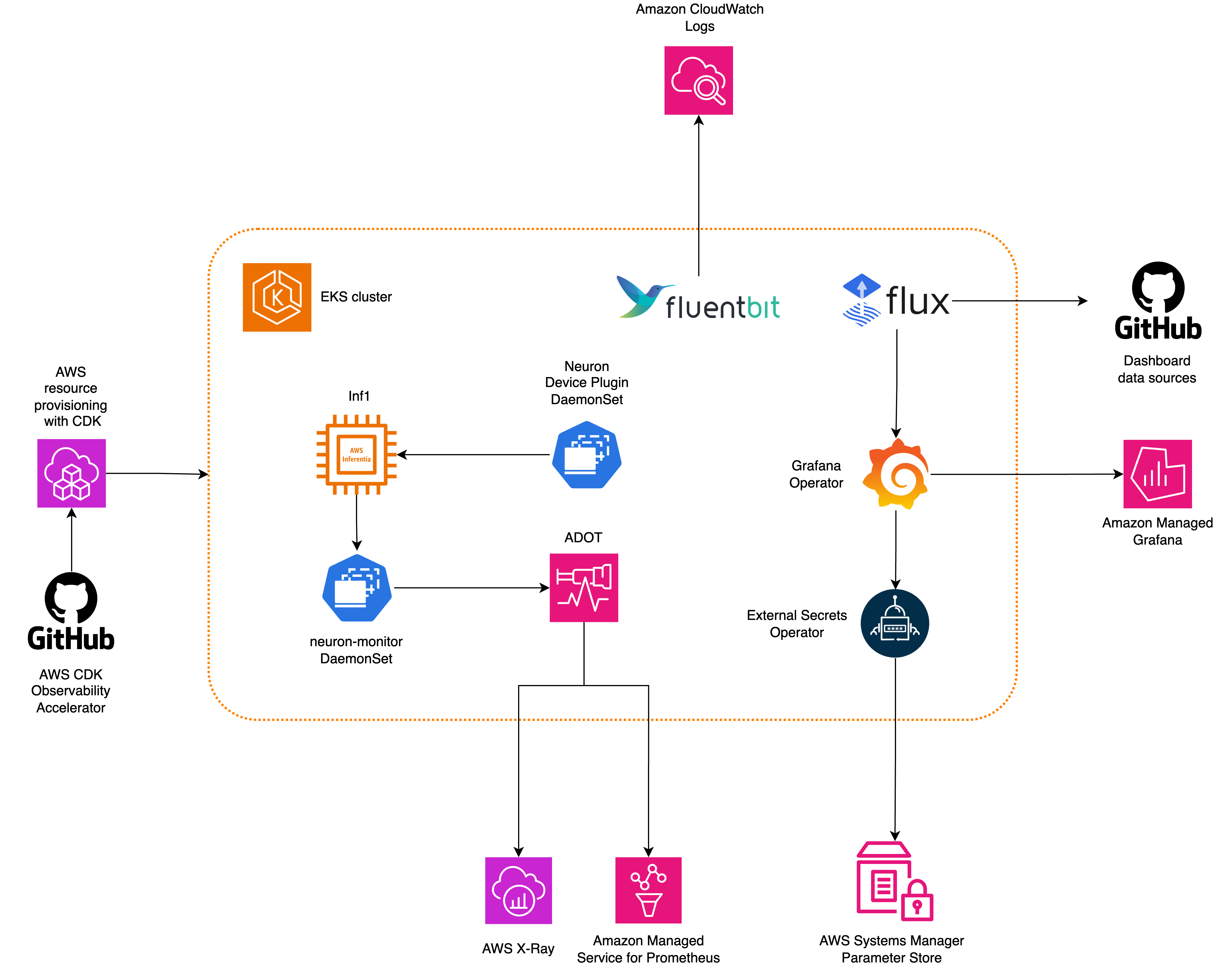
As an Amazon Associate, we may earn from qualifying purchases.
Watchouts in Smart Contract Monitoring
Smart contract monitoring is often treated as a set-and-forget task, but this approach creates blind spots that attackers exploit. The primary keyword cluster—smart contract monitoring—requires precision. Relying on vague alerts or generic dashboards leads to missed signals. This section identifies the most common pitfalls in current infrastructure and tooling.
Missing Event Signature Validation
Many monitoring setups track raw transaction hashes without decoding the specific event signatures. This is like watching a security camera feed without knowing what each motion sensor represents. You see activity, but you cannot distinguish between a routine transfer and a critical state change. Tools like Circle’s Event Monitoring or the Smart Contract Security Field Guide emphasize decoding event signatures to reduce data redundancy and improve log analysis accuracy.
Over-Reliance on Automated AI Audits
There is a growing trend to use generative AI for real-time monitoring, but this is a weak option. Recent research shows that GPT-4 lacks the ability to detect smart contract vulnerabilities effectively. While it can parse code and write proof-of-concept exploits, it cannot replace a dedicated monitoring infrastructure. Treating AI as a primary alert system leads to false positives and missed critical bugs.
Ignoring the Execution Lifecycle
Monitoring must align with the four steps in executing a smart contract: Creation, Freezing, Execution, and Finalization. Most tools focus only on the Execution phase. If your monitoring does not track the Freezing and Validation steps, you miss the window where logic is locked but not yet active. This gap allows attackers to exploit timing differences between contract deployment and operational readiness.
Assuming Solidity Dominance Equals Simplicity
While Solidity is still in demand, assuming its ecosystem is static is a mistake. The language evolves, and so do the attack vectors. Monitoring tools that do not update their rule sets for new Solidity features become obsolete. You need infrastructure that adapts to the latest compiler versions and standard library changes, not just a static set of alerts from 2023.
Weak Alert Thresholds
Setting alert thresholds based on historical averages rather than real-time anomaly detection is a common mistake. If your threshold is too high, you miss small, coordinated attacks. If it is too low, you drown in noise. Use provider-backed charts and price widgets to contextualize on-chain activity with market data. This helps distinguish between a genuine exploit and a market-driven spike in transaction volume.
Smart contract monitoring strategy: what to check next
Before committing to a specific monitoring infrastructure, it helps to clarify how these tools integrate with existing development workflows. The following answers address common practical objections regarding automation, execution lifecycles, and market demand.
No comments yet. Be the first to share your thoughts!