Why real-time monitoring matters now
The era of relying solely on pre-deployment audits is over. While formal verification and third-party audits remain essential baseline practices, they capture a static snapshot of code logic at a single point in time. They cannot account for the dynamic, adversarial environment in which smart contracts operate post-launch. In 2026, the threat landscape has shifted from simple bugs to complex, multi-vector exploits that trigger only under specific market conditions or after significant capital accumulation.
Passive monitoring simply cannot keep pace with the velocity of these attacks. Real-time smart contract monitoring acts as an active immune system for your protocol, detecting anomalous behavior, unusual transaction patterns, and potential exploit attempts as they happen. This visibility is critical for capital preservation, allowing teams to pause contracts, revoke permissions, or migrate funds before an attacker can drain liquidity. Without this layer of continuous oversight, even the most thoroughly audited contract is vulnerable to novel attack vectors that emerge after deployment.
The financial stakes are unforgiving. The average loss per exploit in recent years has soared, often reaching millions of dollars in a single transaction. For protocols managing significant TVL, a delay of even minutes in detection can mean the difference between a contained incident and a total collapse. Real-time monitoring provides the necessary granularity to identify these threats early, turning potential catastrophes into manageable operational events.
The plumbing behind real-time risk analysis
You cannot analyze what you cannot see. Smart contract monitoring relies on a specific data pipeline: the blockchain generates raw events, RPC nodes deliver those logs, and your infrastructure parses them into actionable signals. This section covers that technical foundation.
How EVM events and logs feed your system
Smart contracts do not broadcast state changes directly. Instead, they emit logs—data structures attached to transaction receipts. These logs contain topics (indexed arguments) and data (non-indexed arguments). Your monitoring system listens for these logs via RPC calls.
For example, a Transfer event in an ERC-20 token emits a log with the Transfer signature in topics[0], the sender and receiver addresses in topics[1] and topics[2], and the amount in data. Your node service filters these logs by topic hash to identify relevant activity without processing every single block.
Choosing the right RPC node infrastructure
The speed and reliability of your risk analysis depend entirely on your RPC provider. Public nodes are often rate-limited or delayed, making them unsuitable for real-time threat detection. You need a provider that offers:
- Low-latency websockets: For instant notification of new blocks or transactions.
- High throughput: To handle the volume of logs during high-activity periods.
- Archive capabilities: If you need to audit historical state changes, not just new events.
Providers like Alchemy, Infura, and QuickNode offer specialized endpoints for event monitoring. For high-stakes finance, you should run your own node or use a dedicated enterprise tier to ensure you never miss a critical transaction due to rate limiting.
Parsing logs for risk signals
Once your node delivers the logs, your application must parse them. This involves decoding the ABI (Application Binary Interface) to translate raw hex data into human-readable parameters. You then apply risk rules to these parsed events.
For instance, if a Withdrawal event triggers a flag because the amount exceeds a threshold, your system can pause further execution or alert a human operator. This parsing layer is where you convert raw blockchain data into decision-ready intelligence.
Visualizing the data flow
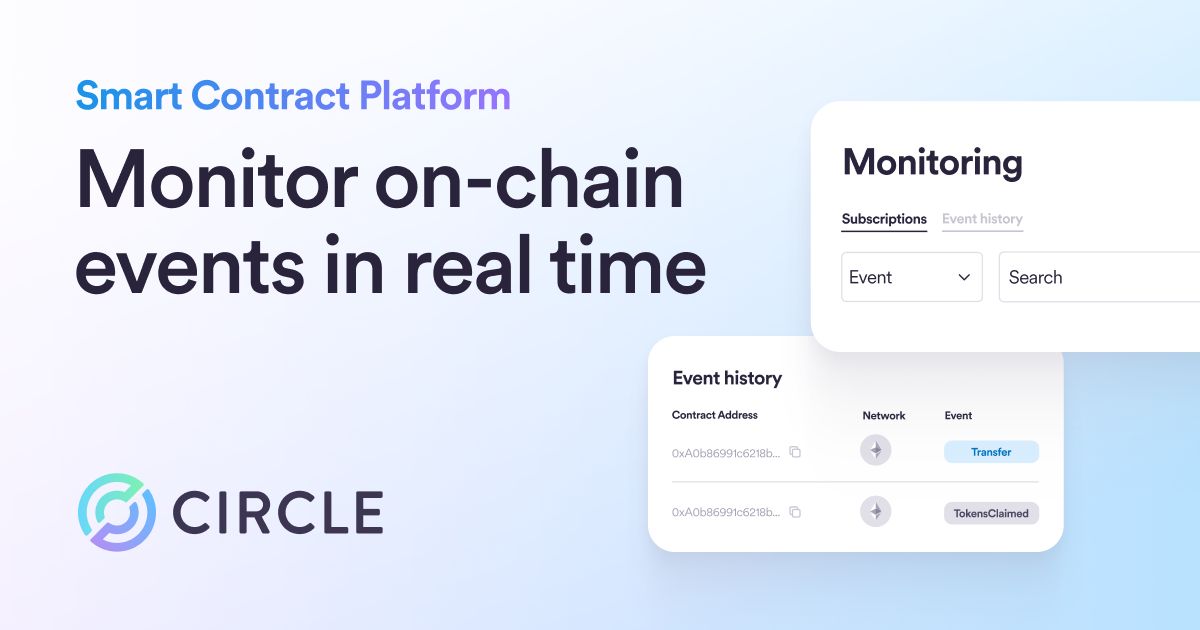
Understanding the flow from contract to dashboard helps you troubleshoot monitoring gaps. When a transaction is mined, the contract emits events. The RPC node captures these events and pushes them to your subscriber. Your parser decodes the data, and your risk engine evaluates it against predefined rules. Any latency in this chain delays your response.
Monitoring market context
Risk analysis does not happen in a vacuum. Smart contract activity often correlates with broader market movements. A sudden spike in withdrawal events might coincide with a sharp price drop. Integrating market data into your monitoring dashboard provides context for these events.
Essential tools for event monitoring
To build a robust monitoring infrastructure, you need specific tools for each stage of the pipeline. The following products are commonly used by developers and security teams to manage smart contract activity.



As an Amazon Associate, we may earn from qualifying purchases.
Top smart contract monitoring tools
The Smart Contract Monitoring for Real-Time Risk Analysis works best as a clear sequence: define the constraint, compare the realistic options, test the tradeoff, and choose the path with the fewest hidden costs. That order keeps the advice usable instead of decorative. After each step, pause long enough to check whether the recommendation still fits the reader's actual situation. If it depends on perfect timing, unusual access, or a best-case budget, include a simpler fallback.
| Factor | What to check | Why it matters |
|---|---|---|
| Fit | Match the option to the primary use case. | A good deal still fails if it does not fit the job. |
| Condition | Verify age, wear, and service history. | Hidden condition issues erase upfront savings. |
| Cost | Compare purchase price with likely upkeep. | The cheapest option is not always the lowest-cost option. |
Setting up risk alerts and triggers
Defensive monitoring only works if you catch the signal before the exploit finishes. You need to configure specific alerts that trigger on-chain anomalies in real time. This shifts your posture from reactive damage control to proactive intervention.
Set hard limits on token outflows. If a single transaction exceeds your protocol’s daily liquidity cap, trigger an immediate alert. This is the most common vector for drain attacks, making it your highest priority monitor.
Track calls to administrative functions like updateOwner or pause. Unauthorized calls to these endpoints often precede a full takeover. Alerting on these signatures gives you time to freeze the contract or revoke permissions before assets are moved.
Sudden, artificial gas spikes can indicate searchers trying to front-run your transactions or bots exploiting MEV opportunities. Monitor gas usage patterns to identify when your contract is being targeted by high-stakes arbitrageurs or attackers.
| Alert Type | Severity | Immediate Action |
|---|---|---|
| Large Transfer | Critical | Freeze contract |
| Admin Function Call | High | Revoke permissions |
| Gas Spike | Medium | Pause pending txns |
Analyzing On-Chain Data for Threats
Collecting data is only half the battle; interpreting it correctly is what stops a loss. You need to distinguish between normal contract behavior and the early warning signs of an exploit or rug pull. This section covers how to read the signals that matter.
Spotting Anomalous Transaction Patterns
Legitimate contracts follow predictable logic. When a contract suddenly executes functions in a sequence that defies its intended design, it is often being manipulated. Look for rapid, high-value transactions from new or unverified addresses. These spikes can indicate a flash loan attack or a liquidity drain attempt.
Monitoring Gas and Execution Costs
Unexpectedly high gas usage can signal a denial-of-service attack or an infinite loop exploit. If a simple transfer triggers complex, nested calls that spike the gas limit, investigate immediately. Tools like Tenderly or Etherscan can help you trace these execution paths to identify the root cause of the inefficiency.
Tracking External Dependencies
Smart contracts rarely operate in isolation. They often pull data from oracles or interact with other protocols. A sudden change in oracle prices or a failed interaction with a trusted partner contract can be a precursor to a larger attack. Set up alerts for any deviation in these external data feeds.
Frequently asked: what to check next
How much does smart contract monitoring cost?
Costs vary by tool and chain. OpenZeppelin Defender offers a free tier for basic monitoring, while enterprise-grade services like Forta or Tally charge based on transaction volume and complexity. Expect to budget $50–$200 per month for small-to-medium projects using hosted solutions. Self-hosted node monitoring requires infrastructure costs but offers unlimited data access.
Is real-time monitoring difficult to implement?
It is straightforward if you use existing infrastructure. Tools like Defender allow you to set up monitors via a dashboard without writing complex indexing code. For custom needs, you can subscribe to blockchain events using lightweight RPC calls. The key is filtering logs efficiently to avoid unnecessary data processing and high gas costs.
Which tools are best for real-time risk analysis?
For developers, OpenZeppelin Defender provides robust, chain-agnostic monitoring with customizable alerts. For investors and analysts, Forta offers a decentralized network for detecting anomalies across multiple protocols. Combine these with on-chain explorers like Etherscan for manual verification. Avoid relying on a single source; layer your monitoring for comprehensive coverage.
No comments yet. Be the first to share your thoughts!