Why monitoring matters in 2026
The landscape of Web3 security has shifted from a focus on static code audits to the necessity of continuous, real-time monitoring. While traditional audits provide a snapshot of a contract’s safety at the moment of deployment, they cannot account for the dynamic conditions that emerge after launch. A contract that is secure on day one may become vulnerable the moment market conditions shift or a new exploit vector is discovered in the broader ecosystem.
Passive auditing is no longer sufficient for risk management in 2026. High-profile breaches continue to stem from issues that were either missed during initial audits or arose from unforeseen interactions between protocols. This reality demands a proactive approach where monitoring tools act as an active defense layer, alerting teams to anomalies before they result in significant financial loss.
The stakes are quantifiable and severe. The total value locked in smart contracts often correlates with the potential impact of a single failure. To understand the scale of risk, consider the volatility and volume of the underlying assets. A failure in a high-volume contract can trigger cascading liquidations across multiple platforms, affecting not just the direct users but the broader financial infrastructure.
This volatility underscores why static security measures are inadequate. Continuous monitoring provides the visibility needed to manage these risks, offering real-time data on contract interactions, transaction patterns, and potential exploit attempts. It transforms security from a one-time compliance check into an ongoing operational necessity, ensuring that teams can respond to threats as they emerge rather than after the damage is done.
Core monitoring infrastructure layers
Effective smart contract monitoring relies on a layered technical stack. You cannot rely on a single data source to verify compliance or detect anomalies. The infrastructure must distinguish between three distinct layers: event logs, transaction traces, and on-chain state verification. Each layer serves a specific purpose in the audit trail.
Event logs are the most common monitoring surface. They record specific actions, such as token transfers or ownership changes, emitted by the contract. However, logs are sparse. They do not capture every internal state change or execution path. For a complete picture, you must look deeper.
Transaction traces reveal the execution path. They show how the contract processed a transaction, including internal calls and storage modifications that logs might miss. This layer is essential for understanding the "why" behind an action. On-chain state verification provides the final truth. It confirms the actual balance or ownership at a specific block height, independent of any event emission.
Tools like OpenZeppelin Defender and the Smart Contract Security Field Guide emphasize this layered approach. They provide templates for monitoring both events and state changes across multiple chains. This ensures that your monitoring infrastructure is robust enough for high-stakes regulatory compliance.
Top smart contract monitoring tools
Selecting the right monitoring infrastructure depends on your specific risk profile and technical stack. While many platforms offer overlapping features, they diverge significantly in alert latency, supported networks, and integration complexity. Below is a comparison of three primary tools used in high-stakes environments: Tenderly, OpenZeppelin Defender, and Circle.
| Tool | Alert Latency | Supported Chains | Ease of Integration |
|---|---|---|---|
| Tenderly | Near real-time | Multi-chain (EVM, Solana, etc.) | High (API-first, SDKs) |
| OpenZeppelin Defender | Seconds to minutes | EVM-focused | Medium (CLI & Dashboard) |
| Circle | Real-time | EVM-focused (USDC-centric) | Low (Simple webhooks) |
Tenderly for deep visibility
Tenderly is often the choice for teams requiring granular, real-time visibility into contract state and execution. It excels at catching incidents before they impact users by monitoring events, balances, and invariants. Its API-first approach makes it highly flexible for custom alerting logic, though this flexibility requires more initial setup.
OpenZeppelin Defender for operational security
OpenZeppelin Defender integrates monitoring directly with its execution and verification tools. It is particularly effective for teams already using the OpenZeppelin ecosystem for smart contract deployment. While it supports multiple chains, its primary strength lies in EVM environments where it provides a cohesive security workflow from monitoring to remediation.
Circle for transaction monitoring
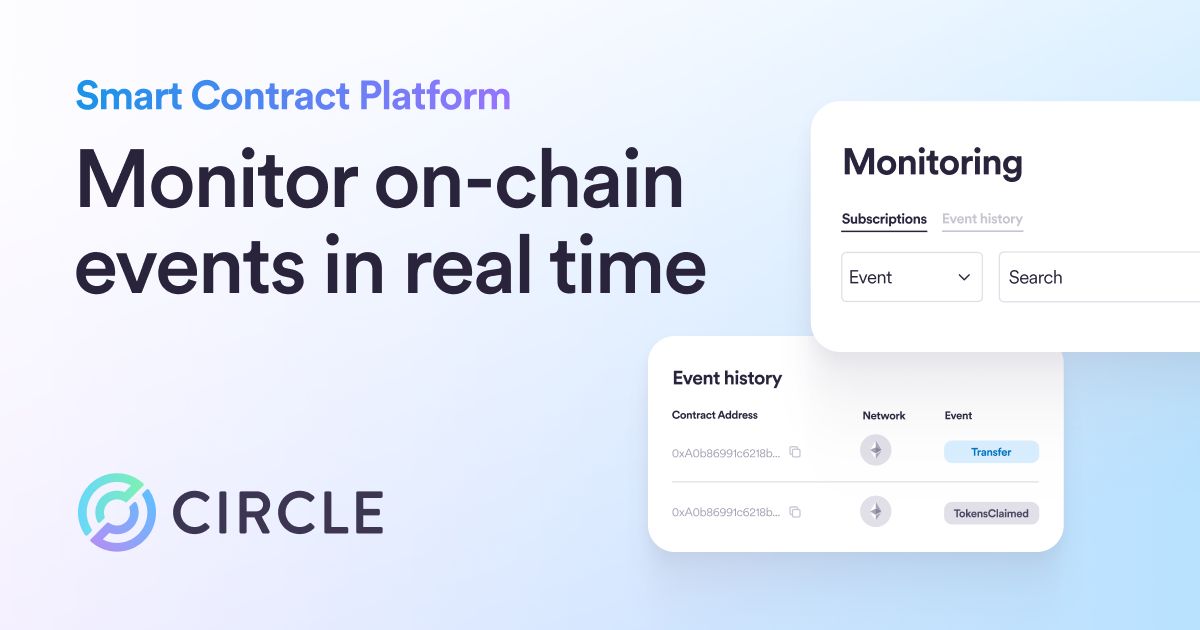
Circle’s monitoring tools are optimized for teams managing USDC flows and compliance. If your primary concern is tracking stablecoin movements and ensuring transaction compliance, Circle offers a streamlined, low-friction experience. It is less suitable for general-purpose contract logic monitoring but is highly effective for financial compliance use cases.
Setting up your monitoring strategy
Building a monitoring strategy is less about buying tools and more about defining what actually matters to your protocol. You need to distinguish between noise—routine transaction volume—and signal, which indicates a potential exploit or compliance breach. Without clear thresholds, your team will suffer from alert fatigue, ignoring the very warnings you set them up to catch.
Start by mapping your critical infrastructure. Identify the core functions that, if triggered maliciously, would cause irreversible damage. These are your non-negotiables. Everything else is secondary.
Begin by listing the specific contract events that require immediate attention. These typically include large token transfers, ownership changes, or sudden drops in liquidity. Use tools like Tenderly to set real-time alerts for these invariants. If a balance exceeds a predefined limit or a function is called outside expected parameters, the system should flag it instantly. Do not rely on manual checks; automate the detection of anomalies.
Monitoring should not exist in a silo. Integrate your alerting system directly into your development and incident response workflows. When an alert triggers, it should create a ticket in your project management tool or notify your on-call engineer via Slack or PagerDuty. This ensures that the right people are informed immediately, reducing the time between detection and mitigation. OpenZeppelin Defender, for example, allows you to create custom monitor templates that fit seamlessly into your existing CI/CD pipelines.
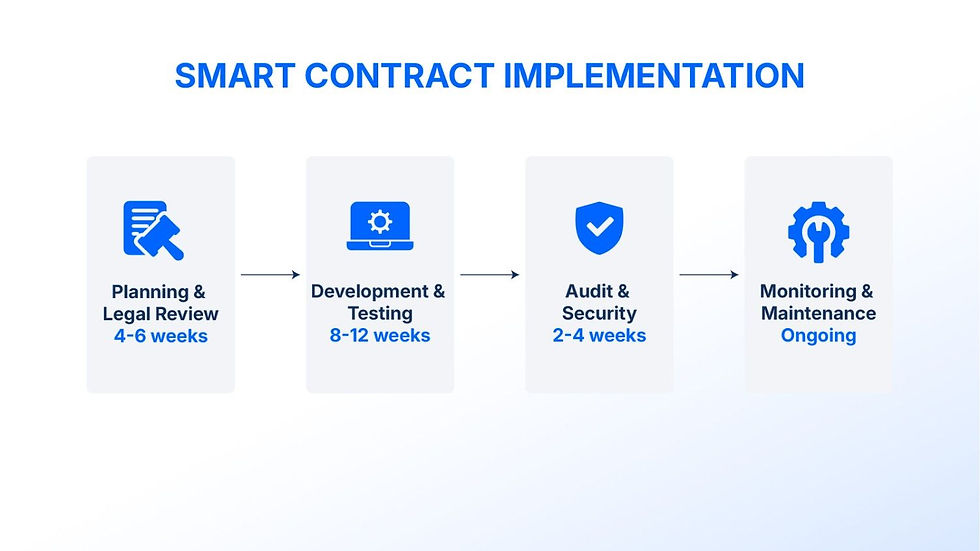
A monitoring system that cries wolf is useless. Before deploying to production, test your alerts against known safe scenarios to ensure they do not trigger falsely. Deliberately trigger edge cases to verify that the system responds correctly. Regularly review your alert logs to identify patterns of false positives and adjust your thresholds accordingly. This calibration process is ongoing; as your protocol evolves, your monitoring rules must adapt to remain effective.
A robust strategy balances sensitivity with specificity. You want to catch every potential threat without drowning your team in irrelevant data. By focusing on critical thresholds and integrating alerts into your daily operations, you create a defensive layer that operates continuously, giving you the time and information needed to act decisively.
Smart Contract Safety and AI Capabilities
Understanding the limits of automated tools and human oversight is essential for maintaining security in high-stakes environments. The following answers address common questions regarding contract verification, AI auditing, and compliance monitoring.
Helpful gear
Use these product recommendations as a starting point, then choose the size, material, and price point that fit how you actually use the gear.


As an Amazon Associate, we may earn from qualifying purchases.
No comments yet. Be the first to share your thoughts!