Smart contract monitoring limits to account for
Setting up smart contract monitoring is less about installing software and more about defining what signals actually matter. Without clear constraints, monitoring infrastructure quickly becomes a source of noise rather than security. The goal is to track state changes that indicate potential exploits, failed transactions, or unexpected token movements.
The primary constraint is data volume. On-chain data is immutable and continuous. Indexing every event from every contract is computationally expensive and often unnecessary. You must filter for specific event signatures and log topics relevant to your protocol’s critical paths. As noted by SCSG, optimizing data redundancy helps reduce the storage burden while preserving the ability to audit historical state.
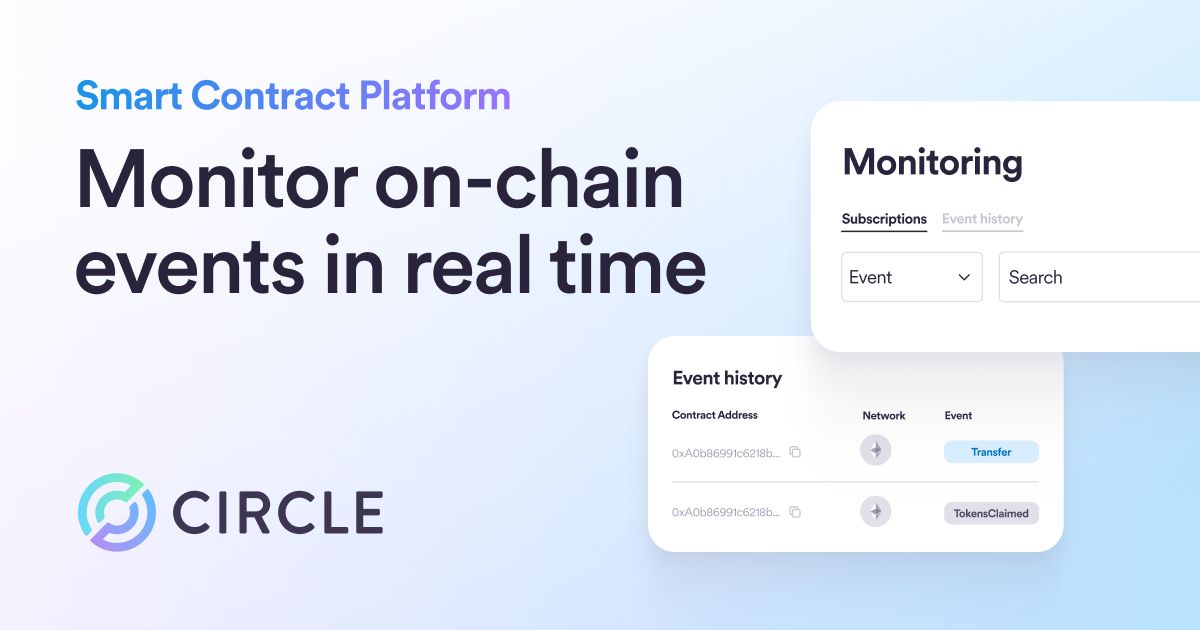
Another constraint is latency. Real-time alerts are only useful if they arrive before an exploit completes. This requires a balance between reliable block confirmation and speed. Services like Circle offer streamlined APIs to simplify this process, reducing the friction of parsing raw logs. However, relying solely on third-party APIs can introduce single points of failure. A robust strategy often combines direct node access with indexed data for verification.
Finally, consider the scope of your monitoring. Are you tracking only your own contracts, or do you need to monitor external dependencies and integrations? Defining these boundaries early prevents alert fatigue and ensures your team focuses on actionable threats rather than background noise.
Weighing the tradeoffs in smart contract monitoring
Choosing a monitoring strategy requires balancing visibility, cost, and latency. There is no single perfect solution; each approach introduces specific constraints that affect how quickly you can detect and respond to threats. Understanding these tradeoffs helps you select the right infrastructure for your specific risk profile.
On-chain vs. off-chain indexing
On-chain monitoring reads event logs directly from the blockchain. This method offers high integrity because it relies on the canonical state of the network. However, it often suffers from high latency during periods of network congestion. You might miss critical seconds of activity if your node is syncing or if gas prices spike, delaying your response time.
Off-chain indexing services, such as The Graph or Covalent, aggregate data into accessible databases. These tools provide near-instant access to historical and real-time data, enabling faster alerting. The tradeoff is a reliance on third-party infrastructure. If the indexer experiences downtime or data corruption, your monitoring capabilities may be blind to on-chain events until the service recovers.
Rule-based vs. behavioral analysis
Rule-based monitoring triggers alerts when specific conditions are met, such as a transaction value exceeding a threshold or a function call to a known risky address. This approach is easy to implement and has low computational overhead. It is effective for detecting known attack vectors but often generates false positives during normal market volatility or unexpected user behavior.
Behavioral analysis uses machine learning or statistical models to identify anomalies based on historical patterns. This method is superior for detecting novel attacks or subtle manipulation tactics that do not match predefined rules. However, it requires significant computational resources and a robust dataset for training. Misconfigurations can lead to missed alerts or excessive noise, requiring ongoing maintenance to keep the model accurate.
Cost vs. granularity
High-frequency monitoring provides detailed visibility into every transaction and state change. This granularity is essential for high-value protocols where even small anomalies can signal a significant threat. The downside is cost. Processing every event on popular chains like Ethereum or Solana can quickly exceed the limits of affordable node providers or indexing services.
Sampling or lower-frequency monitoring reduces costs by checking only a subset of transactions or polling at longer intervals. This approach is suitable for lower-risk applications or internal audits where real-time precision is less critical. However, it creates blind spots. Between polls, an attacker might execute a multi-step exploit that completes before your next check, leaving you with no chance to intervene.
| Factor | Low Cost Approach | High Visibility Approach | Primary Risk |
|---|---|---|---|
| Latency | High (polling/sampling) | Low (real-time indexing) | Delayed response |
| Data Integrity | Medium (third-party reliant) | High (direct on-chain) | Indexer downtime |
| Implementation | Simple (rule-based) | Complex (ML/anomaly) | False positives/negatives |
| Scalability | High (low compute) | Low (high compute) | Cost overruns |
Choose the next step
Smart contract monitoring is not a single tool but a layered infrastructure. You need to decide which layer handles the noise and which handles the signal. The following steps outline how to build that framework, moving from raw data ingestion to actionable alerts.
Start by capturing raw logs directly from the blockchain. Event monitoring in Solidity is the most efficient way to track state changes without processing every block. Use node providers to subscribe to specific contract addresses and event signatures. This raw data is your foundation; without it, you are blind to internal state transitions.
Raw logs are noisy. You need a processing layer that filters irrelevant events and normalizes data structures. Map complex event parameters to human-readable fields. This step reduces the volume of data you need to analyze and ensures your alerting system only sees anomalies, not routine transactions.
Define what constitutes an anomaly. Set thresholds for unusual token transfers, sudden drops in liquidity, or unexpected ownership changes. Alerts should trigger only when these thresholds are breached. This prevents alert fatigue and ensures your team focuses on genuine threats rather than market volatility.
An alert is useless if it doesn’t lead to action. Connect your monitoring output to your incident response channels, such as Slack, Discord, or PagerDuty. Include contextual data in the alert, such as the transaction hash and the specific event signature. This allows your team to investigate immediately without digging through logs.

Monitoring is not set-and-forget. Regularly review your alert history to identify false positives and missed detections. Adjust your thresholds and filters based on real-world usage. This iterative process ensures your monitoring infrastructure remains effective as your smart contracts and the threat landscape evolve.


As an Amazon Associate, we may earn from qualifying purchases.
Spotting Weak Monitoring Options
Most smart contract monitoring guides push expensive, enterprise-grade solutions or vague "best practices" that don't survive real-world deployment. The gap between theoretical security and operational reality is where weak options live. They promise comprehensive coverage but deliver noisy alerts, high latency, or blind spots to critical state changes.
A weak option often fails the redundancy test. If your monitoring relies on a single RPC endpoint or a single indexer, you have no visibility when that node drifts or goes down. Solidity events are your primary data source, but relying solely on them without verifying on-chain state consistency creates a fragile foundation. You need to understand event signatures and data redundancy to distinguish between a true anomaly and a indexing glitch.
Avoid tools that obscure their data pipeline. If you can't trace an alert back to a specific block and transaction hash with confidence, the alert is noise. Look for infrastructure that allows you to cross-reference event logs with actual contract state. This isn't about adding more tools; it's about ensuring the ones you use provide verifiable, low-latency signals. Weak monitoring leaves you reacting to problems after they've already impacted the chain.
Smart contract monitoring: what to check next
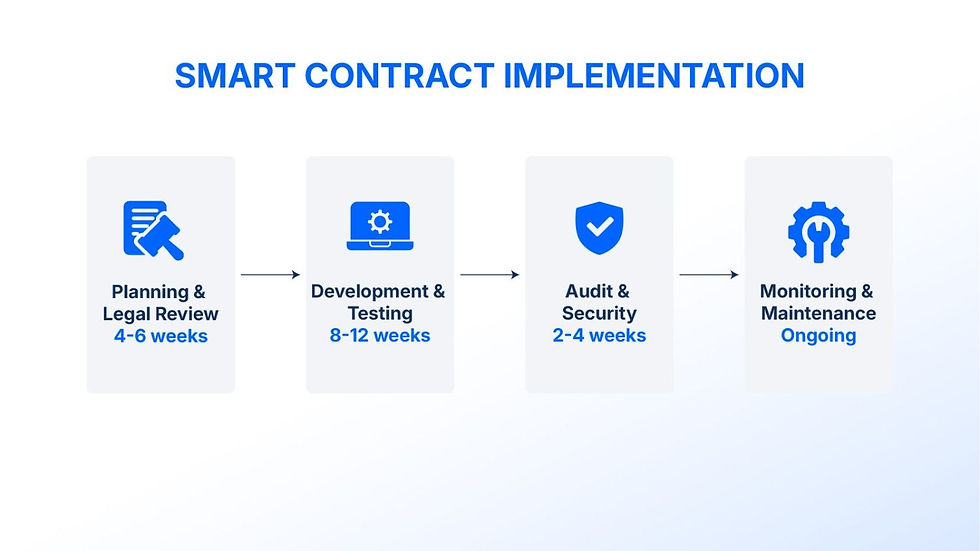
Continuous monitoring is the final layer of defense in Web3 security. Once code is deployed, it cannot be changed, making runtime verification and active log analysis essential for detecting anomalies before they become exploits.
Effective monitoring requires a combination of automated tools and manual oversight. By integrating these practices, you can maintain visibility into your contract’s health and respond to threats with precision.
No comments yet. Be the first to share your thoughts!